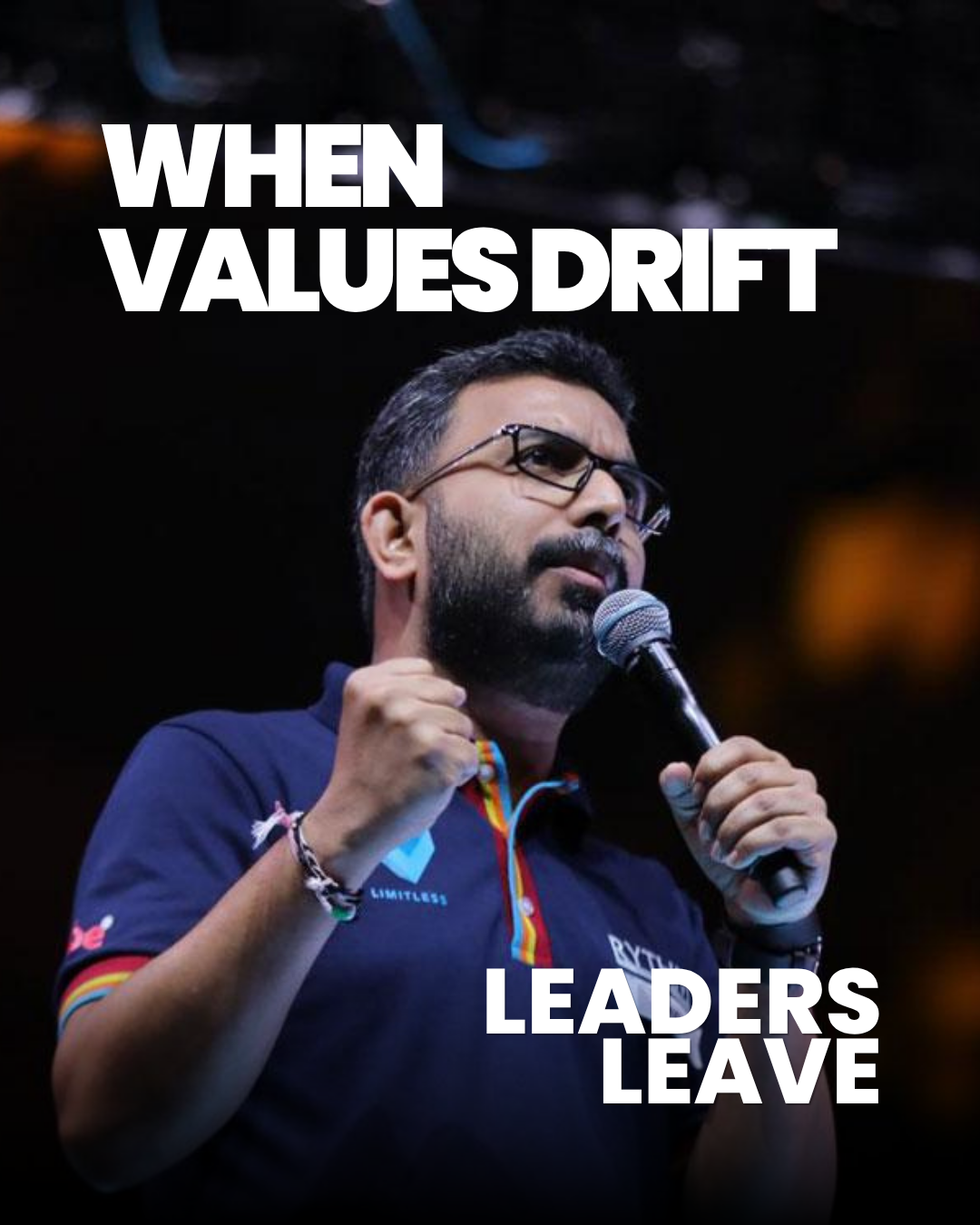
Inside the human-first values, AI urgency, and networker voices that shaped his move to Ignite and Brainify in 2026
Great leaders don’t just vanish. They leave after that last meeting when they realize the room isn’t listening anymore.
That’s the frame that best explains why Chief Pathman Senathirajah, long associated with building QNET’s networks, eventually walked away after more than 25 years and launched Ignite. Not because of one blow-up. Not because he wasn’t paying attention. He stayed because he believed QNET could be better, and he kept trying to pull it back toward what made it work in the first place.
This story matters right now for a simple reason: network marketing is in a fast, unforgiving transition. AI-driven tools, digital education, and shifting consumer expectations aren’t theoretical anymore; they shape how distributors recruit, train, and sell. Companies that evolve give their field leaders leverage. Companies that don’t leave them trying to win tomorrow’s market with yesterday’s equipment. In Africa, where network marketing communities can scale quickly through trust and relationships, that gap shows up faster and it hits louder.
The public backdrop has gotten noisy in places, with critical narratives and media framing around financial and governance-related claims, but that isn’t what explains the internal turning point described by people close to this chapter. The more relevant context is cultural: a business that once sold itself on community and empowerment, and a growing sense among distributors and departing leaders that the lived experience no longer matched the message.
Inside QNET, the defining shift at least as those familiar with the company’s recent direction describe it wasn’t a dramatic collapse. It was a slow corporate drift. The language changed. The priorities changed. The way decisions landed in the field changed. Over time, the organization started to feel less like a network built around people and more like a corporate machine managing people.
One signal carried particular weight: how long-serving employees and leaders were treated. In the internal stories that circulate among networkers, terminations started to look more like corporate cost-cutting than the loyalty culture QNET had publicly promoted. What stung wasn’t only that people were shown the door. It was the feeling that they left without adequate compensation or dignity, as if years of contribution could be reduced to a line item.
For networkers, moments like that don’t stay buried in HR paperwork. They move through chats, trainings, and team calls. They change how people read every new policy, every delayed payment cycle, every shift in support. A company can insist its mission hasn’t changed, but when the community sees builders treated as disposable, the mission starts to sound like marketing.
That’s why the emotional center of this story isn’t a boardroom. It’s the field. QNET’s distributors aren’t some peripheral stakeholder group; they generate the revenue. And the consistent complaint in this arc is that networkers were increasingly sidelined as corporate agendas took precedence over community needs. When the people who carry the business feel unheard, everything else gets harder: retention, morale, recruiting, even basic belief.
There’s another axis to the drift, and it’s more concrete: product strategy in the age of AI. Network marketing has always rewarded those who equip their teams with tools that make the job simpler and the pitch more relevant. In recent years, the industry has been undergoing rapid transformation driven by AI and digital tools. Against that backdrop, QNET is described as failing to evolve its product portfolio and infrastructure in ways that matched where the market was headed.
Why does that matter so much? Because distributors don’t just sell products. They sell confidence: confidence that what they’re offering is current, that it solves real problems, that the company is investing in the future. When a company appears to ignore the AI shift, it doesn’t just miss a trend. It sends a message intended or not that the field can wait while the world moves on.
In the version of events that networkers themselves tell, this wasn’t for lack of internal pressure. Chief Pathman, who served QNET and the QI Group for more than 25 years in senior roles including Managing Director of The V and Director of Marketing and Sales, spent years trying to influence direction from within. He pushed for innovation. He pushed for AI alignment. He pushed for networker-centric policies and a return to cultural integrity. Again and again, those efforts were ignored or pushed aside.
That distinction matters because it changes how to read his departure. In any corporate exit, it’s easy to hunt for the one decisive clash. This one reads more like attrition. A long stretch where the fight stays alive because someone believes it can still be won. Then the moment it becomes clear that the company he’d devoted decades to was no longer fighting for the same things he was.
Along the way, internal fragmentation compounded the strain. Executives and departments, as they’re described in this narrative, pursued personal agendas at the expense of a collective mission and distributor welfare. For a network business, that’s corrosive. The field needs unified direction, clean support structures, and a sense that everyone at headquarters understands what the job looks like outside it. When leadership energy turns inward, distributors experience it as neglect.
QNET’s public messaging has continued to emphasize community and empowerment. The problem, as told by people who lived the mismatch, is the widening gap between those stated values and how the people who embodied them were treated internally. The more that gap grows, the more the brand starts to sound like a slogan rather than a lived culture.
And all of this plays out under a financial headline that can mislead. QNET’s estimated annual revenue of roughly $520 million suggests stability. Yet the structural vulnerability described here sits beneath that number: a distributor base increasingly feeling unseen, unsupported, and undervalued. A company can be large and still be brittle if its core community loses faith that it’s being built with them, not on them.
Chief Pathman’s next move sharpens the contrast. After leaving, he launched Ignite, positioned around AI-powered products, energy solutions, and the Brainify AI education application. This isn’t just a new venture with a new logo. It reads like an answer to the gaps he spent years naming inside QNET: modern tools, AI education, and a forward-facing story that networkers can carry with credibility.
The scale of the shift is part of why this moment has landed so heavily in Africa’s network marketing circles. Roughly 1000 network marketing leaders across Africa are reported to be migrating their networks toward Ignite following his departure. That kind of movement doesn’t happen because of a press release. It happens when thousands of people, independently and collectively, decide they’d rather build their futures somewhere else.
So what is this story really about? It’s about what happens when a company built on human relationships starts treating those relationships as secondary. It’s about strategic lag in a moment when strategy can’t lag. It’s about the cost of internal agendas in a business that depends on shared purpose. And it’s about how one leader’s exit can become a mirror held up to an organization’s choices.
There’s a tendency to treat departures like this as personality drama. That misses the more useful lesson. Chief Pathman didn’t become relevant to this story because he left. He became relevant because of how long he stayed and what he tried to fix before he went.
If Ignite represents anything beyond a competitive entrant, it’s a kind of counterfactual: the version of QNET that could have been, had it embraced AI-aligned innovation, protected its builders, and kept networkers at the center rather than the margins. You don’t have to romanticize the past to recognize the signal in the present.
QNET didn’t lose Chief Pathman because he gave up. It lost him because, over time, the company gave up on the things he kept trying to defend. And if you’re a networker watching all this unfold, the real question isn’t who’s winning the headline this week. It’s which organization still understands that the field isn’t a channel. It’s the whole point.