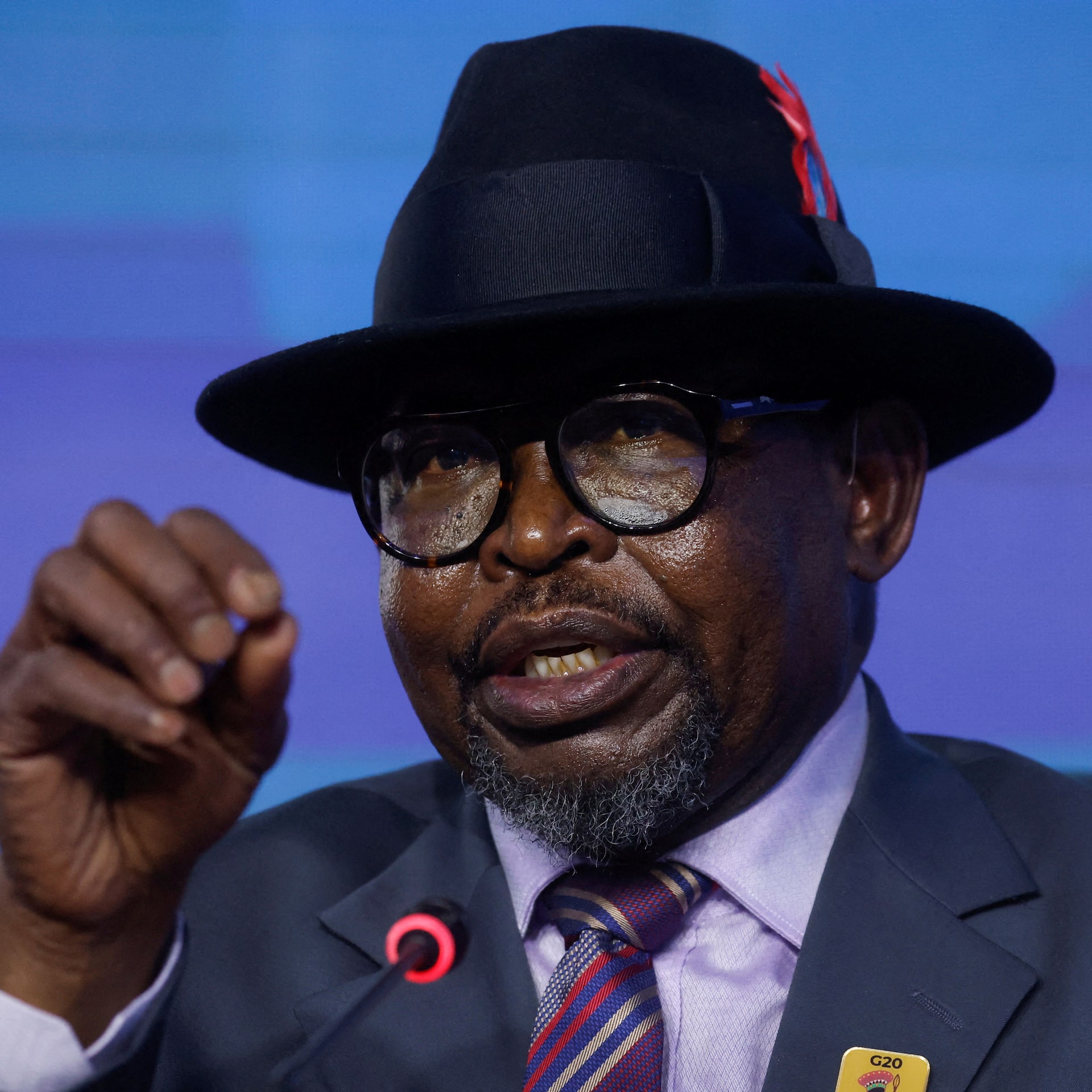
A major diplomatic controversy has emerged after the United States reportedly refused accreditation to South Africa’s Finance Minister Enoch Godongwana for a key G20 finance summit in Washington. The G20 snub also extended to Lesetja Kganyago, head of the South African Reserve Bank, along with other senior officials from South Africa.
What Happened?
The controversy unfolded ahead of a high-level meeting of the Group of Twenty, where global finance leaders gather to address pressing economic challenges.
Despite South Africa being a full G20 member, its top financial representatives were unable to secure access to the summit, effectively excluding them from critical discussions.
Such a G20 snub is rare and has immediately drawn international attention.
Why the G20 Snub Matters
The G20 snub is not just symbolic—it carries real diplomatic and economic weight.
Diplomatic Tensions
Denying entry to senior officials signals possible strain in relations between Washington and Pretoria. These types of actions often reflect deeper geopolitical disagreements.
Economic Influence
South Africa’s absence could mean:
- Reduced participation in shaping global financial policies
- Missed opportunities to advocate for developing economies
- Limited engagement in debt and trade discussions
Regional Representation
As one of Africa’s largest economies, South Africa’s exclusion may leave developing nations with less representation at the table.
Official Response
So far, authorities in the United States have not issued a detailed explanation for the accreditation refusal.
In South Africa, the situation has raised concerns among policymakers and analysts. The absence of Enoch Godongwana and Lesetja Kganyago is seen as a significant setback for the country’s economic diplomacy
Possible Reasons Behind the G20 Snub
While official clarity is still lacking, several explanations are being discussed:
Administrative Complications
Issues related to accreditation or travel clearance may have contributed, though such problems are uncommon at this level.
Political Differences
Diverging international positions may have influenced the decision, especially amid evolving global alliances.
Strategic Signaling
Some experts believe the G20 snub could be a calculated diplomatic move to send a broader message.
Economic Impact on South Africa
The implications of the G20 snub may extend into economic territory.
Investor Sentiment
Global markets often react to diplomatic developments. This situation could:
- Create uncertainty among investors
- Affect confidence in South Africa’s economic outlook
Policy Participation
Without representation, South Africa may struggle to:
- Influence global economic frameworks
- Contribute to international financial reforms
- Advocate for regional priorities
Global and Public Reaction
The G20 snub has sparked widespread debate among analysts and observers.
Some see it as a serious diplomatic setback, while others urge caution until full details emerge. The lack of transparency has only intensified speculation.
What Happens Next?
Attention now turns to how both nations will respond.
Diplomatic Efforts
There may be attempts to resolve the issue through formal engagement between the United States and South Africa.
Further Statements
More clarity is expected as officials provide updates and explanations.
Future G20 Role
The long-term impact of this G20 snub will depend on whether South Africa faces similar challenges in upcoming meetings of the Group of Twenty.
Conclusion
The reported G20 snub involving Enoch Godongwana and other high-ranking officials highlights a significant shift in diplomatic dynamics. For South Africa, this situation brings renewed scrutiny to its position in the global economy and its relationship with the United States. As the story unfolds, attention will center on understanding the factors behind the move and what it could mean for future international cooperation.