
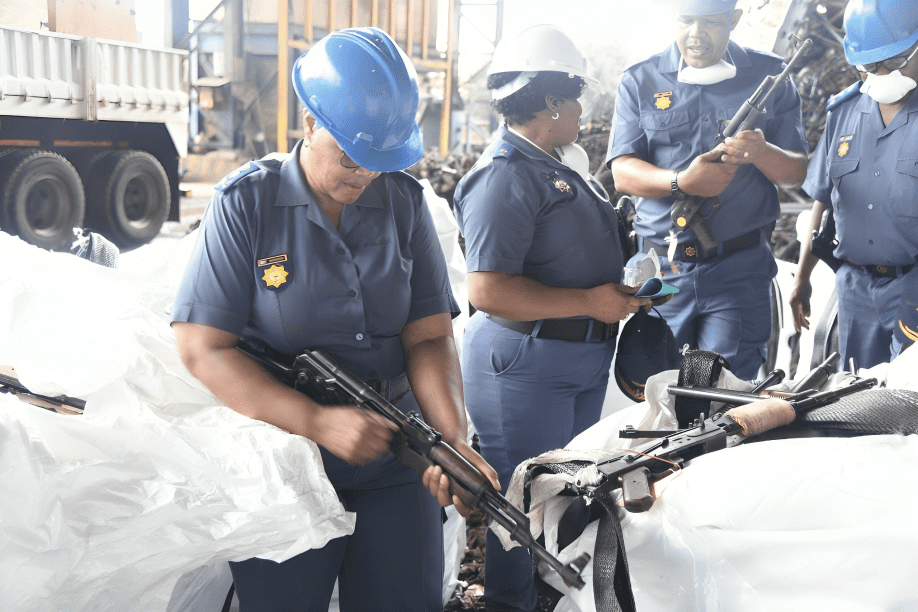
The fight against Illegal Firearms took a major step forward on Thursday as nearly 14,000 confiscated guns were destroyed in Johannesburg, marking the second destruction process of the financial year in South Africa.
Police confirmed that the firearms were seized during nationwide crime-fighting operations and linked to serious offenses including farm attacks, cash-in-transit robberies, and crimes against women and children.
Authorities say the destruction ensures the weapons can never return to criminal circulation.
What Happened?
The destroyed firearms were mechanically dismantled and melted down under strict supervision.
Officials from the South African Police Service (SAPS) confirmed that the process forms part of a broader strategy aimed at reducing the availability of illegal weapons used in violent crimes.
This latest batch brings the total number of firearms destroyed over the past seven years to more than 300,000.
Police say the removals represent sustained enforcement against the proliferation of illegal guns across provinces.
Where Did the Illegal Firearms Come From?
According to law enforcement authorities, most of the weapons were confiscated during:
- High-density police operations
- Roadblocks and stop-and-search campaigns
- Raids in crime hotspots
- Compliance inspections
- Operation Shanela deployments
Operation Shanela, a nationwide anti-crime initiative, has played a significant role in increasing firearm seizures through targeted intelligence-led policing.
Some of the firearms destroyed were directly linked to active criminal investigations and court proceedings before being approved for disposal.
Why Illegal Firearms Remain a Major Threat
Illegal firearms are widely regarded as a key driver of violent crime in South Africa.
Experts note that firearms significantly increase the lethality of crimes such as:
- Armed robberies
- Gang-related shootings
- Domestic violence incidents
- Organized heists
By removing 14,000 weapons from circulation, authorities aim to disrupt criminal supply chains and reduce opportunities for armed violence.
Police leadership emphasized that illegal firearms often circulate repeatedly within criminal networks if not permanently destroyed.
Official Statements and Strategy
Senior police officials described the destruction as “a decisive step in protecting communities.”
They reiterated that once legal processes are completed — including forensic testing and court proceedings — seized weapons are scheduled for destruction to ensure accountability.
Authorities also highlighted that firearm control is not a once-off effort but part of a long-term enforcement strategy involving:
- Intelligence-driven investigations
- Border security monitoring
- Collaboration with prosecutors
- Community reporting mechanisms
Officials said transparency in the destruction process is crucial to maintaining public trust.
Crime Categories Linked to the Seized Weapons
Police confirmed that many of the destroyed firearms were connected to serious criminal activities, including:
- Farm attacks in rural provinces
- Cash-in-transit heists involving organized syndicates
- Crimes targeting women and children
- Armed robberies in urban centers
Criminologists argue that eliminating firearms used in these crimes prevents future offenses and weakens organized criminal groups.
However, they caution that destruction alone does not address the root causes of gun violence, such as illegal trafficking and socioeconomic factors.
Public and Community Reaction
Community safety organizations have welcomed the move.
Residents in high-crime areas say visible enforcement actions such as firearm destruction send a strong message to criminals.
On social media platforms, citizens expressed support for intensified policing but also called for:
- Faster court processes
- Stronger anti-corruption safeguards
- More visible patrols in high-risk neighborhoods
Some advocacy groups have also emphasized the need for education campaigns about safe firearm ownership and compliance.
Long-Term Firearm Control Efforts
Over the past seven years, authorities have destroyed more than 300,000 firearms.
These include:
- Confiscated illegal guns
- Weapons surrendered during amnesty periods
- Firearms forfeited through court rulings
Experts say combining amnesty programs with enforcement operations has increased the volume of weapons removed from circulation.
Police continue to encourage individuals in possession of unlicensed firearms to surrender them voluntarily during designated amnesty windows.
Challenges in Combating Illegal Firearms
Despite significant progress, illegal firearm proliferation remains a complex issue.
Challenges include:
- Cross-border trafficking
- Stolen licensed weapons entering black markets
- Delays in court finalization
- Resource limitations for forensic testing
Security analysts argue that intelligence sharing and stronger regional cooperation are essential to prevent new weapons from replacing those destroyed.
What Happens Next?
Police confirmed that additional destruction processes are planned as more confiscated firearms complete the legal cycle.
Authorities are also expected to intensify high-density operations under Operation Shanela.
Officials urged communities to report illegal firearm possession anonymously through established tip-off channels.
Further updates are likely as new seizure statistics are released later in the financial year.
Conclusion
The destruction of nearly 14,000 Illegal Firearms in Johannesburg marks a significant milestone in South Africa’s ongoing battle against violent crime.
With more than 300,000 guns destroyed over seven years, authorities are demonstrating sustained commitment to reducing armed violence.
While enforcement efforts continue, experts stress that lasting progress will depend on comprehensive strategies that combine policing, prosecution, prevention, and public cooperation.