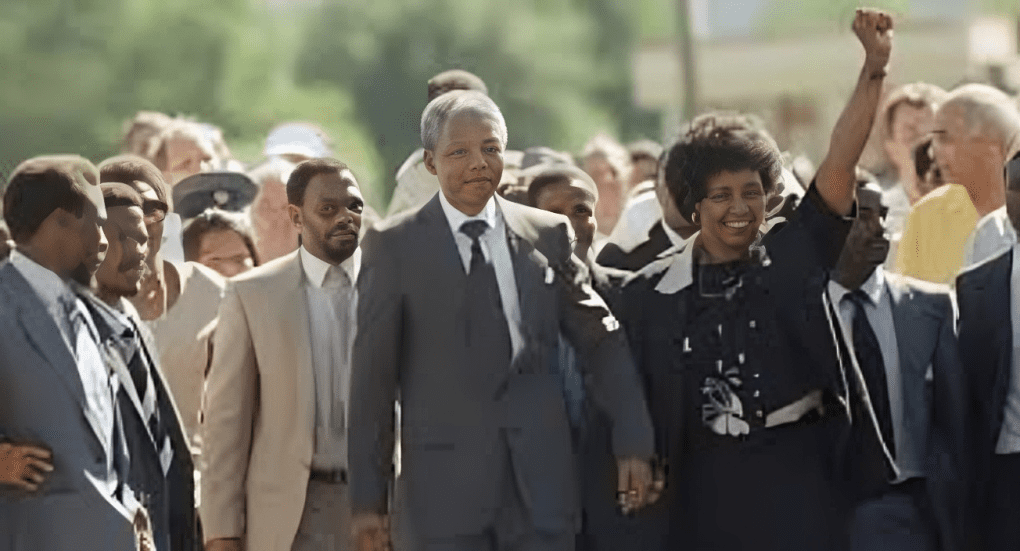
Johannesburg, South Africa — Today marks 36 years of Madiba Freedom, celebrating Nelson Mandela’s historic release from Victor Verster Prison on 11 February 1990 after 27 years of incarceration. Mandela’s freedom symbolized hope, resilience, and the dawn of a new era in South Africa.
The release of Mandela, affectionately known as Madiba, remains one of the most defining moments in the fight against apartheid. His leadership during and after imprisonment set the stage for the creation of a democratic South Africa.
The Moment of Freedom
On that historic day, Mandela walked out of prison to greet thousands of cheering citizens. Media from around the world broadcasted his release live, and his first speech emphasized peace and unity:
“I stand here before you not as a prophet, but as a humble servant of you, the people.”
This moment was more than a personal milestone; it marked the beginning of the end for South Africa’s decades-long system of racial segregation.
Why Madiba Freedom Matters
The significance of Madiba Freedom goes beyond Mandela himself. His release signaled:
- The start of negotiations to dismantle apartheid
- The empowerment of political prisoners
- Global attention to South Africa’s struggle for equality
- The eventual election of South Africa’s first Black president in 1994
Mandela’s calm and courageous leadership inspired a nation divided by decades of racial injustice.
Public Reaction and Celebration
Across South Africa, citizens celebrated the anniversary of Madiba Freedom with parades, flag-waving, and commemorative events. Streets were lined with South Africans of all races, a powerful symbol of the unity Mandela envisioned.
Many schools and universities held lectures and seminars to educate the younger generation about Mandela’s leadership and the historical context of apartheid.
Madiba’s Leadership Style
Mandela’s approach to leadership was unique. Even after decades in prison, he promoted:
- Forgiveness over revenge
- Dialogue over conflict
- Inclusivity in governance
His release demonstrated the importance of moral authority and reconciliation in healing a divided nation
Robben Island and Victor Verster Prison: The Journey to Freedom
Mandela spent most of his incarceration on Robben Island, where prisoners endured harsh conditions, forced labor, and political isolation. His time on the island strengthened his resilience and commitment to justice.
The last 14 months of imprisonment at Victor Verster Prison were under less restrictive conditions, allowing Mandela to engage with visitors, plan strategies for South Africa’s democratic future, and prepare for his role as a national leader.
Legacy of Madiba Freedom
The anniversary of Mandela’s release is not only a historical reminder but also a lesson in leadership, patience, and perseverance. Madiba Freedom embodies:
- The power of enduring oppression with dignity
- The ability to lead a nation through reconciliation
- The importance of justice, equality, and democracy
Globally, Mandela is celebrated as a symbol of peaceful resistance, courage, and moral leadership.
Social Media and Global Commemoration
In 2026, the 36th anniversary of Madiba Freedom saw vibrant digital engagement:
- Citizens shared personal reflections, photos, and videos on Twitter, Instagram, and Facebook
- News outlets aired documentaries and interviews with those who witnessed Mandela’s release
- Educational institutions hosted webinars discussing Mandela’s philosophy and leadership
These initiatives ensure that Mandela’s message continues to inspire new generations.
Madiba Freedom in Education and Awareness
Teachers, historians, and civil society organizations use Mandela’s release to:
- Educate students about apartheid and the liberation struggle
- Highlight the significance of moral courage and leadership
- Encourage civic engagement and social justice advocacy
By keeping Mandela’s story alive, South Africans preserve the lessons of resilience, unity, and equality for future generations.
Global Impact of Madiba Freedom
Mandela’s release influenced the world far beyond South Africa:
- Inspired civil rights and anti-apartheid movements globally
- Highlighted the importance of peaceful negotiation in conflict resolution
- Led to international praise and recognition, including the Nobel Peace Prize in 1993
Today, Madiba Freedom is celebrated internationally, reinforcing Mandela’s enduring legacy as a champion of human rights.
Conclusion
The 36th anniversary of Madiba Freedom reminds South Africans and the world of the extraordinary courage and leadership of Nelson Mandela. From the hardships of Robben Island to his release at Victor Verster Prison, Mandela exemplified resilience, forgiveness, and vision.
His freedom not only changed the course of South African history but also set a global example of how moral leadership can triumph over oppression. As the nation commemorates Madiba Freedom, Mandela’s legacy continues to inspire generations to uphold justice, equality, and human dignity.