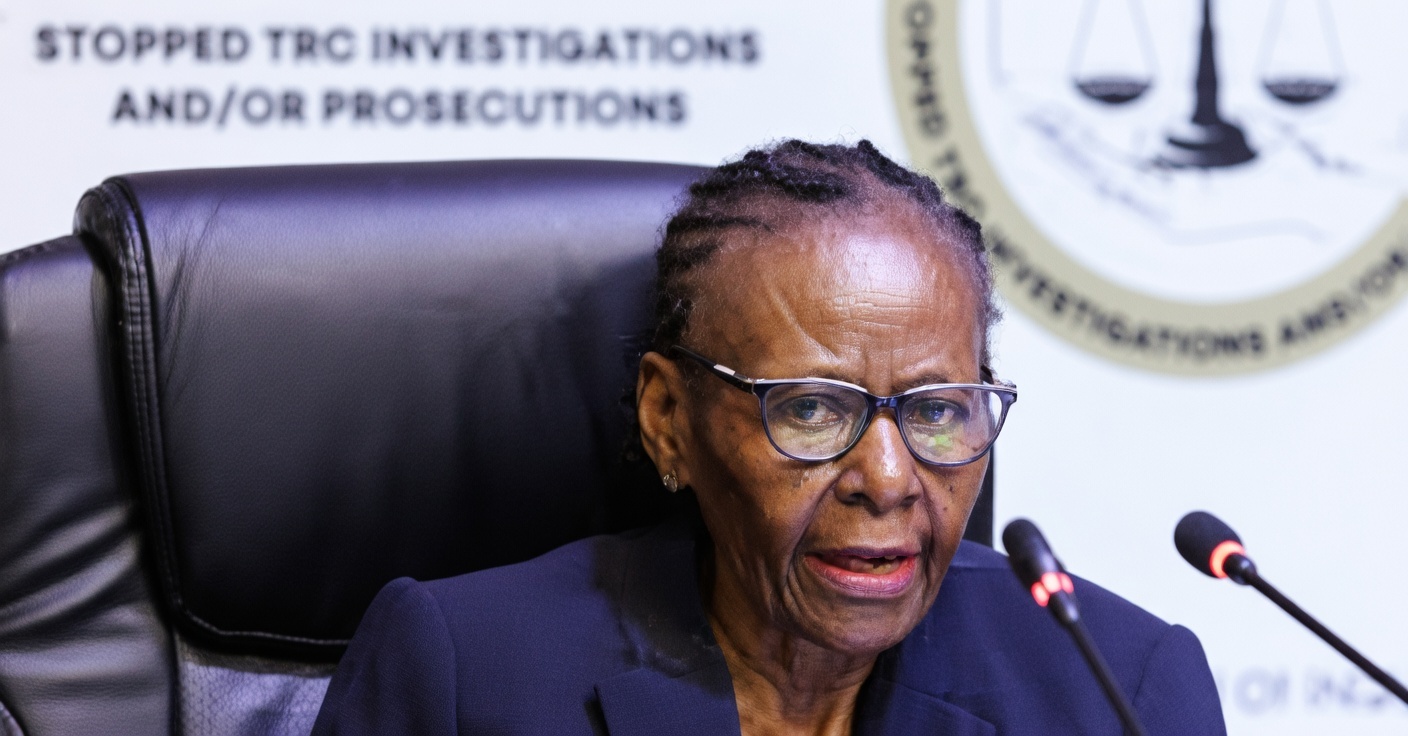
A high-stakes legal confrontation over justice recusal is set to unfold at the High Court in Johannesburg on Monday, as former Presidents Thabo Mbeki and Jacob Zuma seek to challenge retired Justice Sisi Khampepe’s refusal to step aside from overseeing cases related to the Truth and Reconciliation Commission (TRC). Legal observers say the case highlights the delicate balance between judicial independence and the perception of impartiality in politically sensitive matters.
The central issue revolves around whether Justice Khampepe’s continued involvement could undermine public trust in the TRC inquiry process. Mbeki and Zuma argue that her refusal to recuse herself may give rise to questions of bias, potentially affecting the outcome of high-profile historical investigations.
What Led to the Justice Recusal Challenge?
The TRC Inquiry has long been a cornerstone of South Africa’s efforts to address past human rights violations. While the TRC concluded most of its work decades ago, certain cases remain under review, including those involving senior political figures.
Mbeki and Zuma’s legal application claims that Justice Khampepe may have prior connections or perceived interests that could influence her judgments. They contend that stepping aside is essential to maintain the credibility of the justice system and the TRC process.
On the other hand, supporters of Justice Khampepe maintain that there is no evidence of actual bias, and her experience makes her well-qualified to continue. This contrast sets the stage for a robust legal debate about justice recusal standards in South Africa.
The High Court Hearing
The High Court in Johannesburg has scheduled a full bench to hear the case, which is considered significant due to its national implications. Full bench hearings typically involve multiple judges reviewing complex or precedent-setting legal issues.
During the proceedings, the court will examine legal arguments regarding the ethical obligations of judges to recuse themselves and the impact of perceived bias on public confidence. Analysts note that the ruling could provide a framework for future cases involving judicial impartiality in politically sensitive situations.
Key Figures Involved
- Thabo Mbeki: Former South African president (1999–2008), known for his diplomatic and economic policies.
- Jacob Zuma: Former South African president (2009–2018), involved in multiple legal controversies.
- Justice Sisi Khampepe: Retired Constitutional Court judge, appointed to handle certain TRC-related cases.
The dispute underscores the tension between prominent political figures and the judiciary, particularly when historical accountability is at stake.
Why Justice Recusal Matters
Justice recusal is a cornerstone of judicial ethics. Judges are expected to step aside in cases where personal interest, past associations, or other circumstances could reasonably lead to questions of impartiality.
Experts argue that recusal is not merely a procedural formality; it directly affects public confidence in the judiciary. In cases involving TRC Inquiry, where historical injustices are at issue, maintaining the appearance of fairness is critical.
This case will test whether South Africa’s courts prioritize the perception of impartiality as strongly as the principle of judicial independence.
Arguments Presented by Mbeki and Zuma
The legal teams for Mbeki and Zuma maintain that Justice Khampepe’s continued role could undermine the integrity of the TRC proceedings. They emphasize:
- Historical sensitivity of the cases involved.
- Potential perceived conflicts of interest.
- The need to preserve public trust in judicial processes.
They request that the court order her recusal, or alternatively, review her decisions in light of potential bias.
Legal experts note that the argument hinges not just on actual bias but also on whether a reasonable observer might perceive bias, a critical standard in recusal cases worldwide.
Justice Khampepe’s Position
Justice Khampepe’s representatives argue that there is no objective evidence of bias. They contend:
- She has the expertise to continue adjudicating the cases fairly.
- Removing her could delay important TRC-related inquiries.
- Judicial independence requires that judges are allowed to assess their own conflicts of interest.
The defense emphasizes that recusal should not be automatic, but rather based on concrete evidence of bias or conflict.
Implications for South Africa’s Legal System
Observers suggest that the court’s decision could have far-reaching consequences:
- Setting Precedents: Establishing clear standards for when judges must recuse themselves.
- Maintaining Public Confidence: Ensuring that sensitive cases are handled transparently and ethically.
- Balancing Independence and Perception: Clarifying the boundary between judicial autonomy and public trust.
This case may influence future disputes involving former political leaders, historical inquiries, or other sensitive legal proceedings.
Political and Social Reactions
The hearing has attracted attention from political analysts, legal scholars, and civil society groups. Many emphasize that the case is about more than Mbeki and Zuma—it is about ensuring judicial integrity in post-apartheid South Africa.
Public commentary highlights:
- The historical importance of the TRC.
- The need for ethical oversight in high-profile cases.
- Potential ramifications for perceptions of fairness in South African courts.
The debate over justice recusal is now a focal point in discussions about accountability and transparency in governance.
Timeline of Events
- 1995–2000s: TRC established to investigate apartheid-era violations.
- 2000s–2010s: Certain high-profile cases under ongoing review.
- Recent Months: Mbeki and Zuma file for review of Justice Khampepe’s refusal to recuse.
- Monday: Full bench hearing scheduled at Johannesburg High Court.
Legal observers will closely follow the proceedings to understand how the courts interpret recusal obligations in historically significant cases.
Next Steps
After the full bench hears arguments, the court will deliberate and issue a ruling. Possible outcomes include:
- Ordering Justice Khampepe to recuse herself, prompting the appointment of another judge.
- Upholding her decision to continue, reaffirming judicial independence.
- Establishing new guidelines for future recusal cases in politically sensitive matters.
Any ruling may be subject to appeal, potentially extending the legal process and sustaining public attention.
Conclusion
The Justice Recusal debate involving former Presidents Mbeki and Zuma is a landmark moment in South African law. The outcome of the TRC Inquiry hearing at the High Court in Johannesburg could shape judicial practices regarding impartiality and public trust for years to come.
The case highlights the ongoing intersection of historical accountability, political influence, and judicial ethics in post-apartheid South Africa. As the nation awaits the court’s decision, the ruling promises to have significant implications for both the judiciary and the broader public perception of justice.