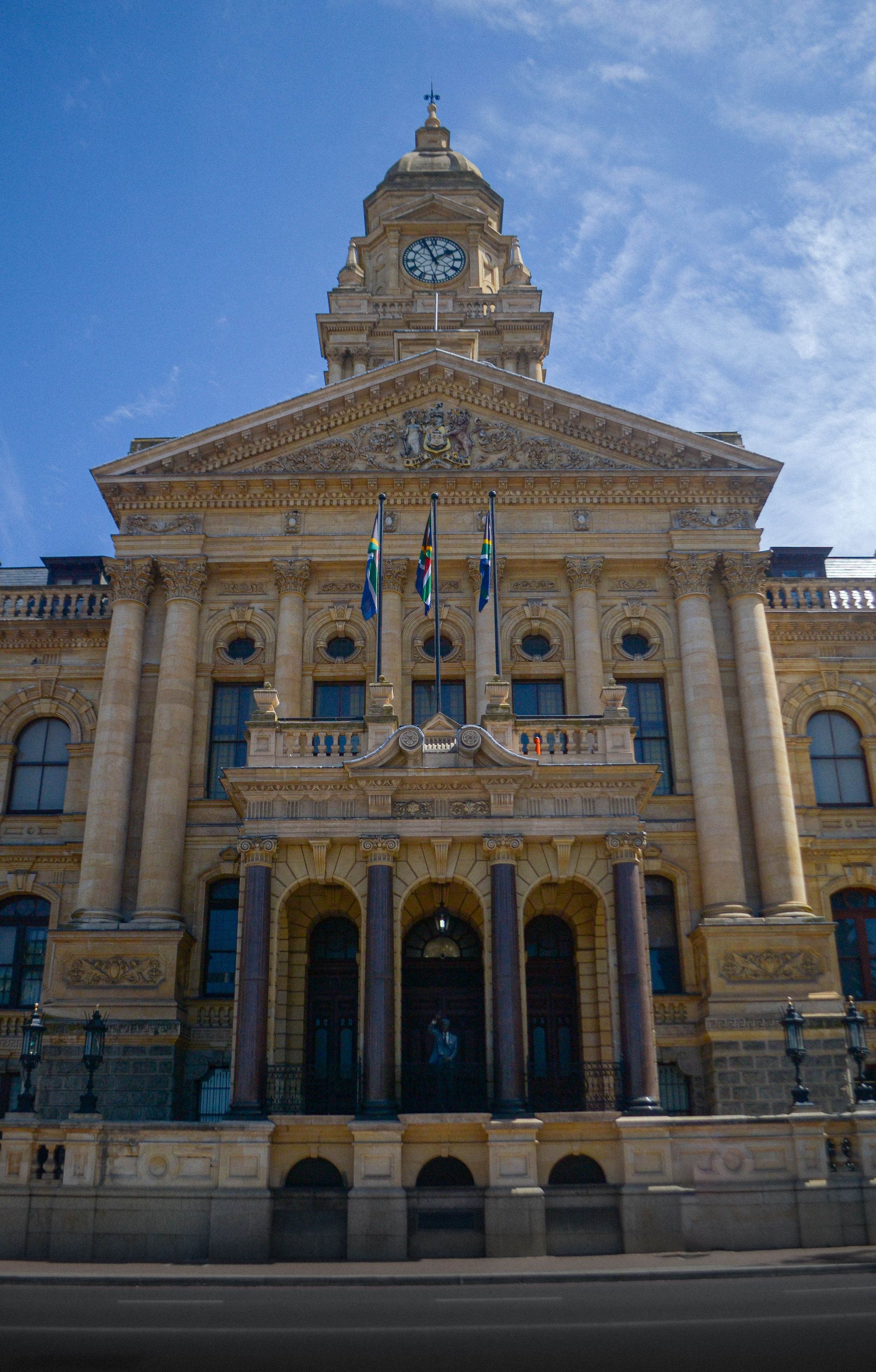
Parliament’s oversight machinery takes centre stage this week, with accountability questions running through nearly every sitting on the programme. From Tuesday, 17 November to Friday, 20 November 2026, committees and plenaries will scrutinise executive performance, audit outcomes, expenditure irregularities and the work of institutions charged with public funds. Deputy President Paul Mashatile faces oral questions in the National Assembly.
The week’s most closely watched accountability item sits with the Ad Hoc Committee to Investigate Allegations made by Lieutenant General Nhlanhla Mkhwanazi. On Tuesday at 14:00, during a virtual plenary sitting, the National Assembly will consider a request to extend the committee’s deadline. The committee has asked for more time to finalise its draft report. That decision rests with the House, and it will determine how soon the findings reach the public.
Additional reference context is available at https://www.parliament.gov.za/press-releases/happening-parliament-week_15_11_2026.
Executive accountability features prominently on Wednesday and Thursday. On Wednesday at 15:00, Ministers in Economics Cluster 5 will answer questions from Members of Parliament in a virtual plenary sitting. The cluster spans seven portfolios: Land Reform and Rural Development; Public Works and Infrastructure; Small Business Development; Tourism; Trade, Industry and Competition; Transport; and Science, Technology and Innovation. On Thursday at 14:00, Deputy President Mashatile appears before the National Assembly in a virtual plenary to respond to oral questions on matters of national and international importance. His sitting is preceded by a meeting of the NA Programme Committee at 08:30 to discuss the business of the House.
Friday brings two virtual mini-plenary sessions, running from 10:00 to approximately 13:00, each built around subjects proposed by individual Members. The first considers a proposal by Ms Andisiwe Kumbaca on measures to safeguard national sovereignty against external and domestic anti-transformation pressures, alongside a proposal by Mr Fadiel Adams on addressing the historical, ongoing exclusion and underrepresentation of the Coloured community in institutions of higher learning, especially those in the Western Cape. The second takes up a proposal by Mr Nicholas Myburgh on the abuse of state apparatus and public funds to interfere with political party affairs and independent institutions of state, and one by Dr Wynand Boshoff on the importance of cultural councils in promoting collective advancement in South Africa.
Meanwhile, those mini-plenaries will also consider a set of committee reports with direct oversight weight. They include the report of the Joint Standing Committee on Financial Management of Parliament on Parliament’s 2025/26 second- to fourth-quarter reports, including the mid-year performance report; the report of the Standing Committee on the Auditor-General on annual briefings by the Directorate for Priority Crime Investigation and the Special Investigating Unit on the processing of matters referred to them by the Office of the Auditor-General of South Africa; and two reports from the Portfolio Committee on Water and Sanitation, one on the Parliamentary Water, Sanitation and Hygiene Caucus and one on the consolidated annual reports of water boards for the 2024/25 financial year.
Roughly 34 committee meetings are scheduled across the week, many of them built around audit and performance scrutiny. On Tuesday, the Portfolio Committee on Trade, Industry and Competition receives a briefing from the department on the status of international trade negotiations and developments in trade relations, returning on Wednesday for a status report on legislation under review and work on the space industry, legislative reviews and the non-proliferation of weapons of mass destruction. The Portfolio Committee on Defence and Military Veterans hears from the Department of Defence on its updated consolidated register of irregular, fruitless and wasteful expenditure, including reconciled amounts, investigation status, consequence management and final outcomes, and from the Chief of the South African National Defence Force on actions taken to improve Boards of Inquiry since his November 2025 instruction.
The Standing Committee on Public Accounts holds a follow-up meeting with the Passenger Rail Agency of South Africa on the investigation report into the procurement of signalling equipment. The Portfolio Committee on Human Settlements examines the department’s title deeds policy commitment and the implications of R7 billion in budget cuts, alongside audit outcomes for the Free State and Eastern Cape provincial departments. The Portfolio Committee on Higher Education receives briefings on governance restoration at the College of Cape Town on Wednesday and on the Cape Peninsula University of Technology on Friday.
By contrast with the scrutiny sessions, the Select Committee on Appropriations works through money bills: the Division of Revenue Amendment Bill (B29-2026), the Adjustments Appropriation Bill (B30-2026) and the Special Appropriation (2026/27 Financial Year) Bill (B31-2026) across several sittings, with briefings from National Treasury, the South African Local Government Association, the Financial and Fiscal Commission and the Parliamentary Budget Office, culminating in a public hearing on Friday. The Executive Undertakings and Petitions Committee tables two petitions on Thursday evening: one from the South African National Colored Persons Communal Reserved Trust Land Beneficiaries Advocacy Committee calling for investigation of matters relating to the Colored Persons Communal Trust Land, and one from the Black Business Federation calling for investigation of alleged procurement irregularities, the exclusion of local communities and the marginalisation of Black-owned businesses in Transnet operations, particularly Transnet Port Terminals.
Other sessions include briefings by the Auditor-General on 2025/26 audit findings for the Department of Higher Education and Training, the National Student Financial Aid Scheme, the National Skills Fund and sector education and training authorities; a review of the collapsed building by the Council for the Built Environment and the Engineering Council of South Africa before the Portfolio Committee on Public Works and Infrastructure; and a webinar by the Select Committee on Cooperative Governance and Public Administration on the impact of section 139 interventions in local government. The Joint Standing Committee on Intelligence and the Joint Committee on Ethics and Members’ Interests both meet in closed session.
The full committee schedule, updated regularly, is published at https://www.parliament.gov.za/storage/app/media/Docs/zlist/01dc2qim5nomyktbsyxfg3pbvzlsuaslhp.pdf. Enquiries may be directed to Moloto Mothapo, Parliament Spokesperson. Whether the House grants the Mkhwanazi committee its extension, and what the follow-up with PRASA yields, will shape how much of this week’s scrutiny translates into consequence.