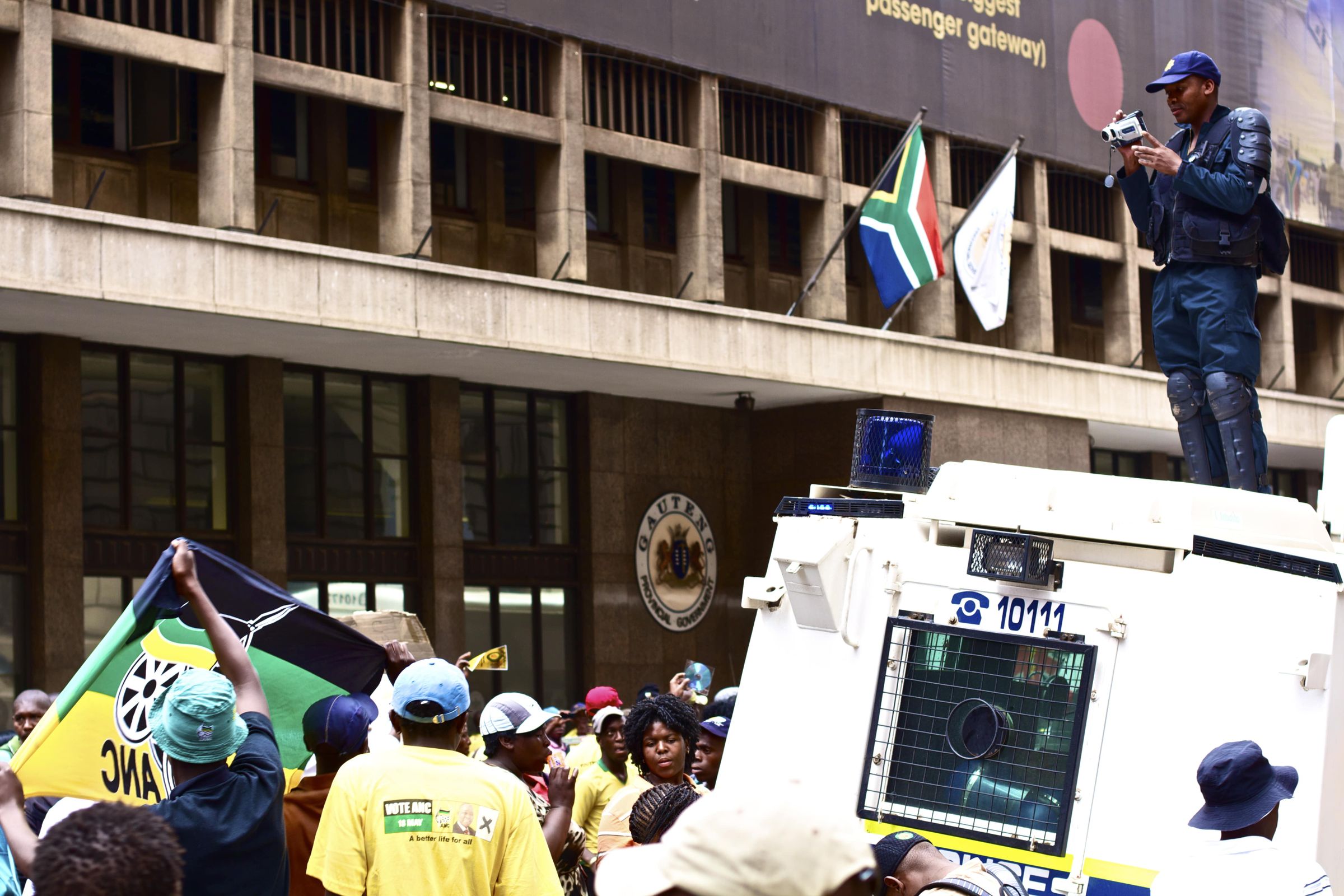
The African National Congress will govern South Africa’s municipalities from a sharply diminished mandate after last week’s local elections, with results announced on Sunday confirming the ruling party’s slide to 30.76% of the national vote. The figure leaves the former liberation movement well short of majorities in key cities and sets the terms for two weeks of coalition negotiations that will determine who governs urban South Africa.
The electoral commission’s tally places the Democratic Alliance second on 24.64%, while uMkhonto weSizwe, the party led by former President Jacob Zuma, took third place with 9.76%. The remaining votes were dispersed across hundreds of smaller parties. That fragmentation has direct consequences for governance: the number of municipalities where no party holds an outright majority more than doubled compared with 2021.
Accountability for the decline rests, in the ANC’s own framing, on its record in office. Party support in local elections has fallen steadily over the past 15 years, a trend attributed largely to failures in delivering basic services such as water and electricity. In the previous municipal vote in 2021, the ANC still commanded 45.59%.
Senior party officials acknowledged the scale of the rebuke. Secretary-General Fikile Mbalula described the result as “catastrophic” for the party once led by Nelson Mandela, though he insisted the ANC would not “go begging” for positions once formal talks begin. “When the people tell us we have fallen short… the honest answer is not to argue with them but to go home and put our house in order,” Mbalula said on Saturday.
President Cyril Ramaphosa, addressing the country after the announcement, framed the outcome in institutional terms rather than partisan ones. “We celebrate the enduring strength of our democracy and the sovereign right of the people of South Africa to choose their representatives,” he said. He also issued a directive of sorts to negotiators, urging parties to approach the bargaining table with humility and warning that “our people’s interest must not be drowned by the quest of political parties or representatives to settle political scores or petty squabbles.”
Under the electoral rules, parties have 14 days to strike deals before city councils are constituted. In Johannesburg, the commercial hub where no party crossed the 50% threshold, the DA won roughly 35% of the vote against 20% for the ANC. That arithmetic gives DA veteran Helen Zille, who campaigned on repairing potholes and leaking water pipes, a plausible path to the mayoralty, contingent on coalition agreements.
Analysts have suggested the most stable outcome for cities like Johannesburg would be an ANC-DA partnership, extending an arrangement the two have maintained in national government for the past two years. The option carries friction. The parties remain ideologically opposed on key questions, including racial redress.
Meanwhile, a further complication comes from ActionSA, which took 16% in Johannesburg. Party leader Herman Mashaba told Reuters on Sunday that his party would not back the DA if Zille is its mayoral candidate, narrowing the set of viable governing coalitions in the city.
With councils due to be formed within two weeks, the negotiating period will test whether South Africa’s fragmented electorate can be translated into functioning municipal governments, and whether the parties involved treat the mandate as an instruction to deliver services rather than a contest over positions.