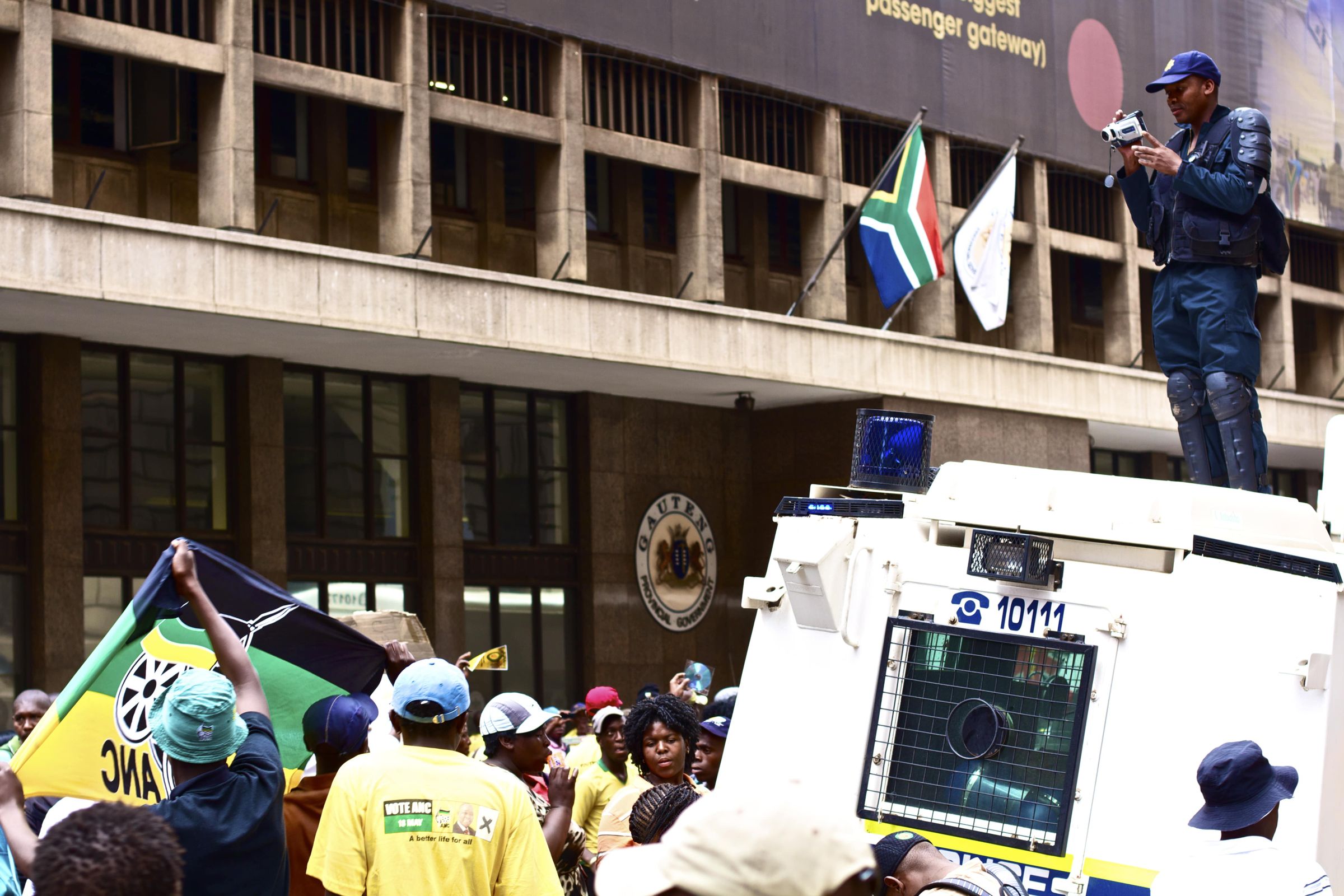
The verdict from voters in South Africa’s 2026 local government elections is blunt: 30.76% for the African National Congress, its worst local election result in the party’s history and down sharply from 46% in 2021. For a movement that once commanded close to 70% nationally, the decline signals that its traditional claim to govern, rooted in liberation credentials and grand promises, no longer compensates for gaps in basic delivery. Where taps have run dry and potholes have gone unrepaired, the parties responsible for running those services have paid at the ballot box, turning the vote into a referendum on whether the machinery of municipal government actually works.
The operational picture is most visible in the country’s eight major metros, where the day-to-day work of running water, roads and municipal services is concentrated. The Democratic Alliance finished first in five of them: Johannesburg, Tshwane, Ekurhuleni, Nelson Mandela Bay and Cape Town, where it won an outright majority. In Johannesburg, the DA took nearly 35% of the vote against the ANC’s 20%, a striking reversal in the country’s economic hub. Votes, however, do not automatically translate into the mayor’s chain. Coalition negotiations will now determine who actually takes operational control of these city administrations.
Durban delivered the sharpest shake-up on the delivery front. Jacob Zuma’s MK Party knocked the ANC off the top spot in eThekwini, the country’s second-largest metro by population, with roughly 38% of the vote. The result places a relatively new party in position to oversee one of South Africa’s most important municipal operations, a test of whether it can convert electoral support into functioning services.
Meanwhile, the broader pattern suggests voters are judging parties less on history and more on performance. ActionSA gained ground across all eight metros, while the Economic Freedom Fighters, which finished fourth nationally on 6.22%, lost support in every one of them. Gayton McKenzie’s Patriotic Alliance also expanded its footprint, particularly in the Western Cape. Nationally, the DA came second on 24.64%, the MK Party third on 9.76%, and ActionSA fifth on 5.67%. No single opposition party has emerged as the country’s clear alternative. Support is dispersing across several contenders instead, each of which will now be measured on what it can actually run.
Participation itself rose, an indication that voters saw enough at stake in local delivery to show up. About 14.9 million South Africans cast ballots, lifting turnout among registered voters to 52%, up from 46% in 2021. That is a notable shift for municipal elections, which have historically struggled to mobilise the electorate, and it reinforces the sense that citizens are engaging precisely because service conditions have become the central political question.
The throughline of this election is a growing willingness to abandon familiar political loyalties, particularly in places where parties have struggled to deliver basic services. The ANC remains South Africa’s largest party, but its days of comfortably running the show are fading, and its standing now depends less on its past than on its capacity to fix what voters experience daily: water that flows, roads without craters, and municipalities that function. The parties that gained ground will face the same test from the other direction, since holding power means being held accountable for the pipes, the roads and the bills.
As coverage of the results and their implications continues, a detailed account is available at https://explain.co.za/2026/11/12/anc-takes-major-election-blow-as-da-leads-in-five-metros/. The message from the electorate was straightforward: struggle credentials and big promises will only carry a party so far when the taps are dry and the potholes are winning. Whether the new operators of these metros can deliver where their predecessors failed is now the question every coalition negotiation will hinge on.