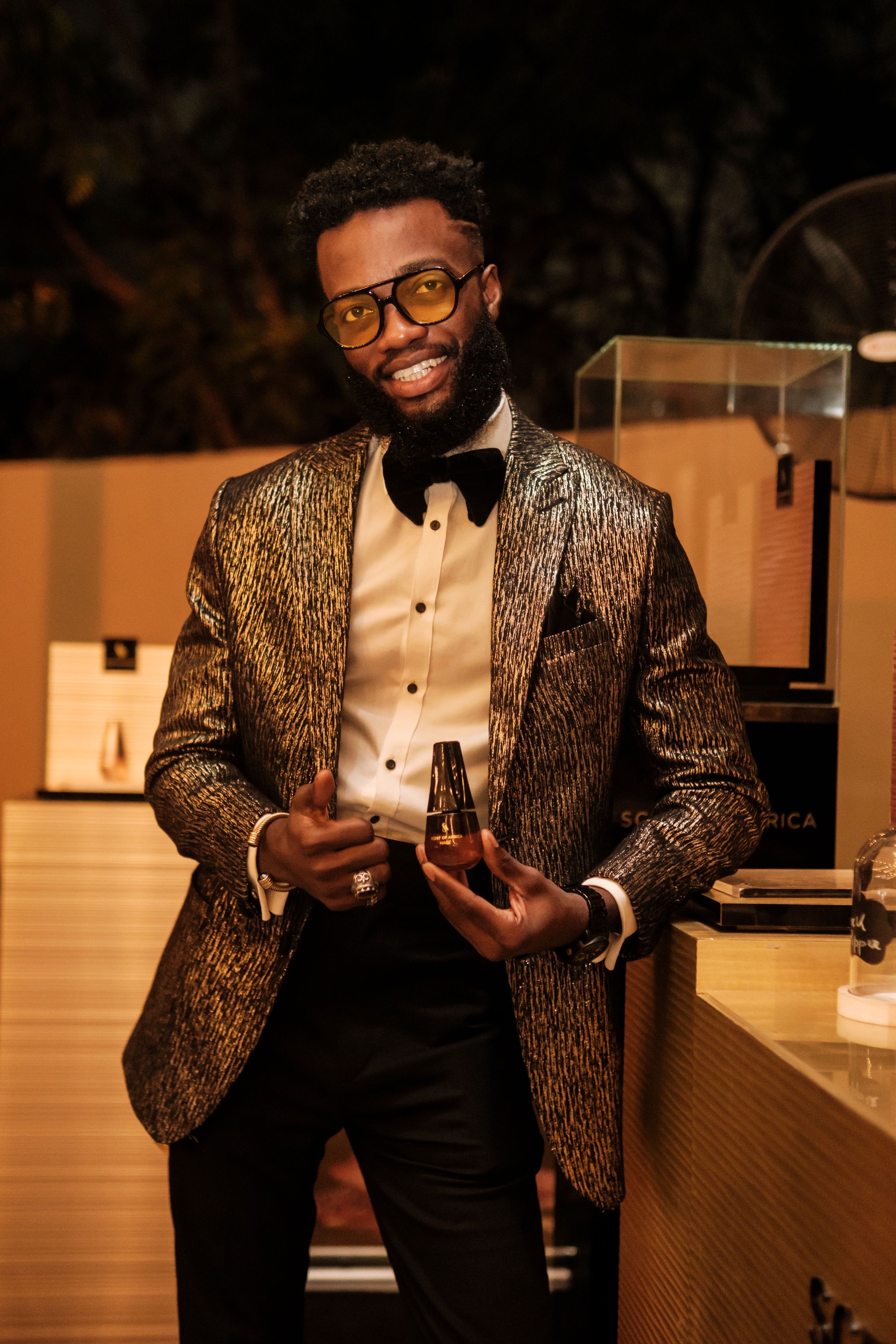
Tokelo Moyakhe grew up in Klerksdorp absorbing the slang, the fashion and the rhythms of South African street culture long before the world knew him as Maglera Doe Boy. Now 33, the rapper and songwriter is carrying that world onto the screen with Mzansi, a two-part short film that weaves together southern African street culture, hip-hop and fashion around a story of forbidden love.
The film, shot in Johannesburg and Mozambique, premieres in Johannesburg on October 26, followed by a screening and livestream on November 2. Speaking to FORBES AFRICA in New York, Moyakhe describes the project as bigger than one country. “It’s not just a South African movie; it’s a southern African movie, and I integrate our culture with Mozambican culture,” he says.
For an artist whose material has always drawn on lived experience, the move into film is a natural extension. “I grew up in South African street culture so much, with the slang, the fashion,” he explains. “When I was eleven, I was rapping about the same stuff I’m rapping about right now. Socio-economic issues, street culture, where I’m from, the things I’ve seen.”
Mzansi also marks a personal milestone. Moyakhe makes his acting debut in the film, appearing alongside fellow musicians including 25K and Young Stunna. The two-time BET nominee is extending his musical output as well, with upcoming tracks Izinja, featuring 25K and Sir Trill, and Tadiana, both produced by international hip-hop artist and producer Swizz Beatz, whom he describes as an advisor and big brother.
Meanwhile, away from the studio and the set, Moyakhe speaks candidly about the business side of an artistic career, urging young creatives to think about entrepreneurship and financial responsibility. His advice is drawn from hard-won experience. “Financially, you have to make mistakes, you need to experience losing a lot, especially if you’re a pioneer,” he says. “So you have to take risks, but know when the risk should be applied, and when it’s going to be a bad risk. I think discernment and taking time to balance your ambition with judging things clearly is my advice.”
His reach now extends beyond music. He has collaborated on fashion projects with A$AP Rocky’s PUMA campaign and with MaXhosa Africa, work that sits comfortably alongside an artistic identity rooted in township style and street culture.
Yet for all the international recognition, Moyakhe remains candid about the cost of where he came from. Over the past eight to nine months, he says, he has spent time digging deep within himself. “I’m 33 this year, and my take on it is that when you leave the ‘hood, you have to heal so much before you become anyone in the world,” he reflects.
It is that honesty, as much as the music or the film, that defines the journey from Klerksdorp to New York, and from the township to the big screen. With Mzansi set to reach audiences in Johannesburg and beyond this month, Moyakhe is bringing the culture that shaped him to a wider stage, on his own terms. Where that honesty takes him next, on screen or in the studio, may be the question his fans are already asking.