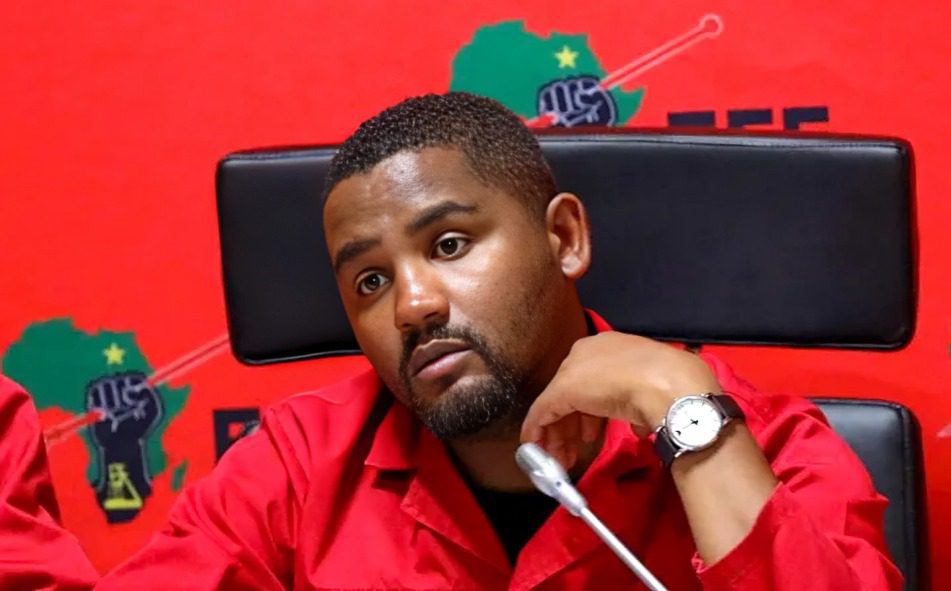
EFF Ultimatum has intensified political tensions in Gauteng after the Economic Freedom Fighters (EFF) demanded the resignation of Ekurhuleni Mayor Nkosindiphile Xhakaza as a condition to re-enter a cooperation agreement with the African National Congress (ANC).
The announcement was made by Economic Freedom Fighters (EFF) Gauteng Chairperson Nkululeko Dunga, who stated that the party would not return to any working arrangement with the African National Congress unless Mayor Nkosindiphile Xhakaza steps down. The development adds further uncertainty to coalition governance in Ekurhuleni, one of South Africa’s key metropolitan municipalities.
What Happened?
Dunga made it clear that the EFF’s position is non-negotiable. According to him, the party has lost confidence in the mayor’s leadership and believes a new political direction is necessary before cooperation can resume.
Ekurhuleni has experienced fragile coalition arrangements since the 2021 local government elections, where no party secured an outright majority. As a result, political stability has depended heavily on agreements between major and smaller parties.
The EFF’s withdrawal from cooperation previously created governance uncertainty, and this latest demand signals continued friction between the two political forces.
Why the EFF Is Taking This Position
While Dunga did not outline detailed allegations in his statement, political analysts suggest the move reflects broader dissatisfaction with governance, administrative decisions, and leadership direction within the metro.
Coalition politics in Gauteng metros has often involved conditional support. The EFF has historically leveraged its position to influence leadership structures, policy direction, and executive appointments.
By issuing this ultimatum, the party appears to be asserting its bargaining power ahead of future electoral cycles.
Impact on Ekurhuleni Governance
The immediate concern is governance stability. Without cooperation between the ANC and EFF:
- Council decisions could face delays.
- Budget approvals may encounter resistance.
- Service delivery processes could slow down.
- Political infighting may intensify.
Ekurhuleni is one of Gauteng’s economic hubs, and prolonged instability could affect investor confidence and municipal performance.
ANC’s Political Dilemma
The ANC now faces a strategic decision:
- Retain Mayor Xhakaza and risk prolonged instability.
- Replace the mayor to restore cooperation and regain operational stability.
Leadership changes within coalition settings often signal political compromise. However, removing a sitting mayor under pressure can also create internal party tensions.
Broader Gauteng Political Landscape
This development reflects the ongoing complexity of coalition politics in South Africa’s metropolitan municipalities. Since no single party dominates, governance often depends on fragile agreements.
The EFF’s stance demonstrates how smaller parties can significantly influence metro leadership decisions. Analysts say such dynamics are likely to continue ahead of upcoming elections.
Public Reaction
Political observers and residents have expressed mixed reactions. Some argue that leadership accountability is essential for improved service delivery. Others worry that repeated political disputes distract from urgent municipal challenges, including infrastructure maintenance and economic development.
Social media discussions have centered on whether the demand represents legitimate accountability or strategic political maneuvering.
What Happens Next?
The ANC has yet to formally respond with a definitive position regarding the mayor’s future. Behind-the-scenes negotiations are expected in the coming days.
If the mayor refuses to resign and the ANC backs him, the metro could face a prolonged period of political deadlock. Alternatively, a leadership reshuffle could reset coalition negotiations.
Conclusion
The EFF ultimatum marks another critical moment in Gauteng’s coalition politics. Whether it results in a mayoral resignation or deeper political standoff, the outcome will shape governance in Ekurhuleni for months to come.
Political stability remains essential for service delivery, economic growth, and public confidence. The coming days will determine whether compromise or confrontation defines the next chapter in this evolving political story.
EFF Ultimatum Shakes Ekurhuleni Leadership
Meta Description:
EFF Ultimatum intensifies pressure on the ANC in Ekurhuleni as the party demands Mayor Xhakaza’s resignation before restoring cooperation.
EFF Ultimatum has escalated political tensions in Gauteng after the Economic Freedom Fighters (EFF) declared it will only rejoin a cooperation agreement with the African National Congress (ANC) if Ekurhuleni Mayor Nkosindiphile Xhakaza resigns. The demand, issued by the party’s provincial leadership, places the stability of one of South Africa’s key metropolitan municipalities under renewed scrutiny.
The statement was delivered by Economic Freedom Fighters Gauteng Chairperson Nkululeko Dunga, who made it clear that the party has lost confidence in the leadership of Nkosindiphile Xhakaza. The ultimatum directly challenges the governing arrangement between the EFF and the African National Congress in Ekurhuleni.
What Happened?
Speaking on the future of cooperation in the metro, Dunga stated that the EFF would not support any renewed agreement unless Mayor Xhakaza steps down. The party’s stance signals a breakdown in trust between coalition partners.
Ekurhuleni, located in Gauteng, has operated under coalition governance since the 2021 local government elections produced no outright majority for any single party. In such an environment, political agreements between parties are essential for passing budgets, approving policies, and maintaining executive leadership.
The EFF’s refusal to re-enter cooperation without leadership change introduces fresh uncertainty into the metro’s political landscape.
Why the EFF Issued the Ultimatum
Although detailed grievances were not publicly itemized, political observers suggest that dissatisfaction with administrative decisions, governance performance, and strategic direction may have influenced the party’s decision.
Coalition politics often hinges on accountability and influence. By tying cooperation to the mayor’s resignation, the EFF is asserting its leverage within council dynamics. The move reinforces the party’s broader narrative that leadership accountability must come before political compromise.
Analysts argue that this tactic is consistent with the EFF’s approach in other municipalities, where support is frequently conditional on policy alignment and leadership considerations.
Governance at Stake
The immediate concern is governance continuity in Ekurhuleni. Without cooperation between the ANC and EFF, several risks emerge:
- Delays in council decision-making
- Potential disruption to budget approvals
- Slower implementation of infrastructure projects
- Increased political contestation within council
Ekurhuleni plays a significant role in Gauteng’s economic output. As one of South Africa’s major industrial hubs, political instability could affect municipal planning and investor sentiment.
Service delivery — including electricity maintenance, water systems, and road infrastructure — depends heavily on council stability. Prolonged political conflict can hinder effective administration.
ANC’s Political Calculation
The ANC now faces a difficult choice. Standing by Mayor Xhakaza may signal internal unity and resistance to external pressure. However, it risks extended instability if the EFF withdraws cooperation.
Alternatively, replacing the mayor could restore short-term political balance but may create internal divisions within the party’s regional structures.
Political insiders suggest that discussions are likely ongoing within ANC leadership circles. Any decision will need to balance governance priorities with party cohesion.
Coalition Politics in Gauteng
The EFF ultimatum reflects a broader reality in Gauteng’s metropolitan politics. Since coalition governance became common after the 2021 elections, municipalities such as Johannesburg, Tshwane, and Ekurhuleni have experienced shifting alliances and leadership disputes.
Coalition agreements require ongoing negotiation. When disagreements escalate, leadership positions often become focal points for political compromise.
Experts note that coalition governance remains a learning curve for many South African political actors. While it allows for shared power, it also introduces fragility into administrative systems.
Public Reaction and Political Debate
Public response to the development has been divided. Some residents argue that leadership accountability is essential for improved service delivery and transparent governance.
Others express concern that frequent political disputes undermine confidence in local government institutions.
On social media, discussions have centered on whether the EFF’s position represents principled oversight or strategic political maneuvering ahead of future elections.
Political commentators have also raised questions about the broader implications for Gauteng’s political climate, noting that similar tensions could surface in other coalition-run municipalities.
What Happens Next?
The next steps depend largely on negotiations between party leadership structures. Possible scenarios include:
- Resignation and Leadership Transition
If Mayor Xhakaza steps down, the ANC could nominate a successor, potentially restoring cooperation with the EFF. - Refusal and Prolonged Standoff
If the mayor remains in office, council proceedings could face resistance, and governance processes may slow. - Renegotiated Cooperation Terms
Both parties could attempt to find middle ground through revised policy commitments or executive restructuring.
Political analysts expect intense behind-the-scenes discussions in the coming days. The outcome will determine whether Ekurhuleni moves toward stability or deeper political contestation.
Broader Implications for South Africa
This development underscores the evolving nature of local governance in South Africa. Coalition politics has shifted power dynamics, granting smaller parties significant influence in metro councils.
The EFF ultimatum demonstrates how coalition partners can shape leadership outcomes and policy direction. It also highlights the challenges of maintaining stable governance without clear electoral majorities.
As the country approaches future electoral cycles, political parties may reassess coalition strategies, leadership selection processes, and negotiation frameworks.
Conclusion
The EFF ultimatum has placed Ekurhuleni’s leadership under intense pressure, testing the resilience of coalition governance in Gauteng. Whether it leads to a mayoral resignation or extended political standoff, the situation carries substantial implications for municipal stability and service delivery.
For residents and businesses alike, the priority remains effective governance and continuity in public administration. The coming days will reveal whether compromise or confrontation defines the next chapter in Ekurhuleni’s political landscape.
As coalition politics continues to shape South Africa’s metros, leadership accountability and negotiation strategy will remain central to maintaining public trust and administrative efficiency.