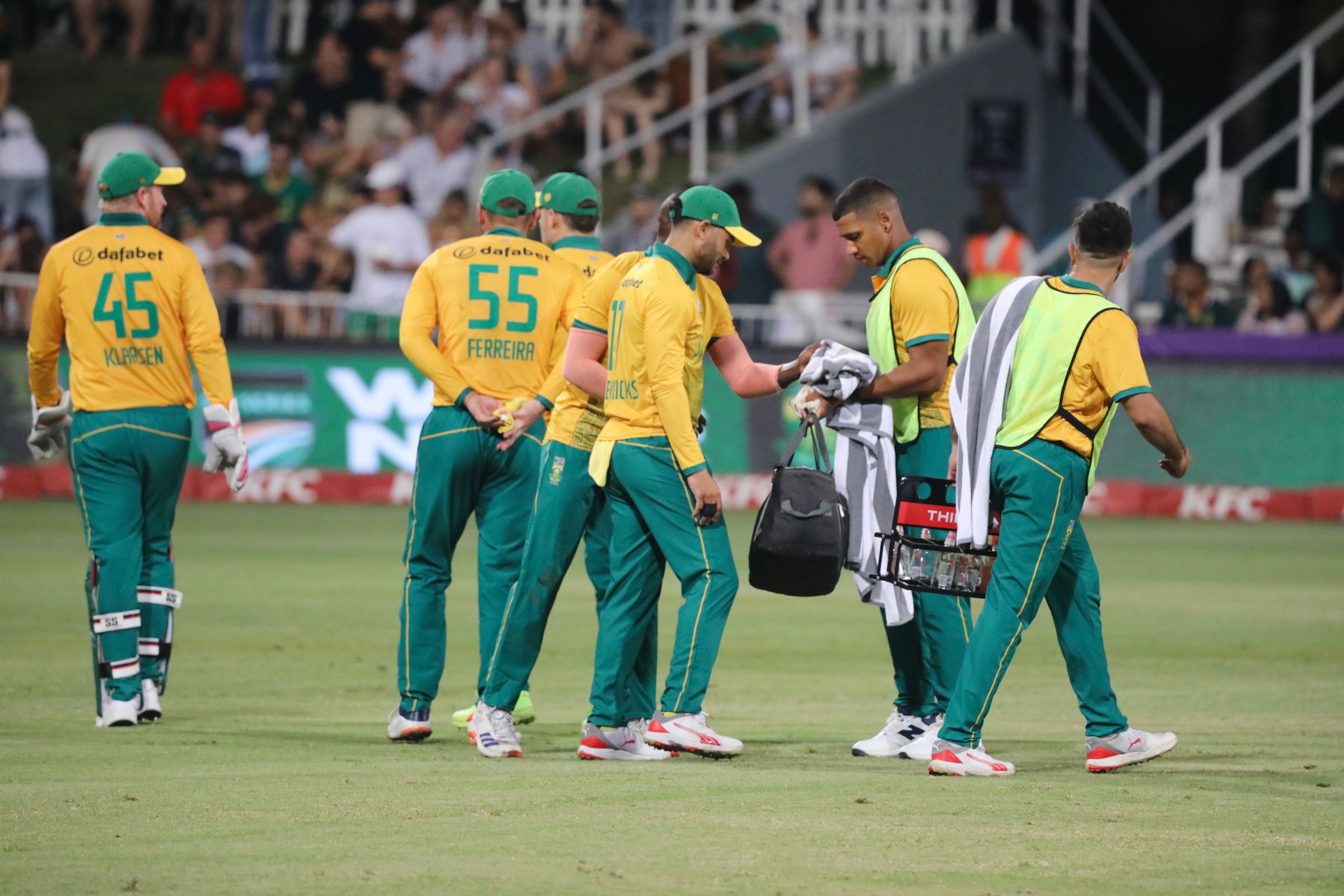
For Matthew Breetzke, the phone call that matters most in South African cricket could not have come at a better time. The ODI star scored a century against Australia in Durban earlier in the tour. Now he stands on the verge of a recall to the Test side for the second match of the series, beginning October 18 at St George’s Park in Gqeberha. His reward comes at the expense of Tristan Stubbs, dropped after a single match, while Kyle Verreynne will hand over the wicketkeeping gloves to Ryan Rickelton and ride the bench. For Breetzke, who has two Test caps to his name, the door has swung wide open.
The match itself is a straightforward proposition for the home side: win or see the series slip away. Australia took the first Test in Durban by 214 runs, a result that stung Temba Bavuma’s team not only because of the margin but because it was the first defeat of his captaincy and only the second in his side’s past 10 matches. South Africa’s form line reads LWWWLWWWWW, the record of a team that has been hard to beat. That makes the Durban stumble feel all the more jarring for players and supporters alike.
Bavuma’s men do have reasons for optimism, and the biggest is Kagiso Rabada. The spearhead is firming for a return after missing the opener, and his presence would give the attack a spark it badly lacked. His numbers explain the anticipation: a wicket every 39.5 balls across his Test career, an even sharper 36.6 over the past four years, and 58 wickets at 21.39 against Australia, including a nine-wicket match in the World Test Championship final last year. If Rabada plays, someone must make way. Anrich Nortje shapes as the logical omission after a heavy workload in his first red-ball match in more than three years, even though he delivered some hostile spells and corking deliveries in Durban.
Meanwhile, the reshuffle does not stop there. With Verreynne and Stubbs both out of the top seven, Marques Ackerman and Breetzke are expected to fill the vacancies. Ackerman, a 30-year-old top-order batter, has dominated domestic cricket for the past few seasons and recently scored a double century for South Africa A. Tony de Zorzi remains unavailable with a hamstring strain. A tactical question also hangs over the selection: the decision to pick two spinners before the first Test backfired, with Simon Harmer and Keshav Maharaj both largely ineffective. Harmer could be the unlucky one to miss out if the hosts retain Nortje or add another seamer, with Gerald Coetzee, Corbin Bosch and Dane Paterson all in the squad.
Australia arrive with fewer decisions to make, though not without intrigue. Josh Inglis is back in the squad after briefly returning home to Perth with a broken finger and appears to be ticking all the boxes in his return to full fitness. Cameron Green is the big watch as he recovers from an abdominal strain, racing the clock to be ready, and an unchanged lineup would be the safe assumption given he is not quite at full capacity. The visitors’ Durban triumph was built on resilience. At 6-124 in the first innings the game could have slipped, but from that point they bossed it. Matt Renshaw dominated with 190 and 82, Nic Maddinson hit 48, and Beau Webster finished the second innings unbeaten on 39, runs that mattered for the players fighting to cement their places.
For Alex Carey, the second Test is personal in a different way. The wicketkeeper took a classic one-handed catch off Josh Hazlewood in Durban that broke a vital partnership in the final innings, yet with the bat he has gone nine Test innings without passing 30 after two years of brilliant form. He will be as desperate as anyone to spend time in the middle.
Conditions in Gqeberha add another layer of uncertainty for both teams. This is the earliest Test cricket has been played in the summer at the venue, and the first Test there between mid-April and mid-November. Over the past decade of first-class cricket at that time of year, pace bowlers have averaged a wicket every 26.94 runs compared to spin’s 32.05, a reversal of the ground’s recent reputation as the most spin-friendly Test venue in South Africa since the Covid pandemic, where spin has taken 40 wickets at 22.77 against pace’s 35 at 34.17. Australia’s history at the ground is mixed, three wins and four losses from seven Tests, and South Africa hold a two-match winning streak there, by 231 runs in 2014 and six wickets in 2018.
The World Test Championship stakes give the match extra weight. South Africa’s defeat dropped them below New Zealand into third on the standings, though their 2-0 win over India keeps them well placed for the 2027 decider with plenty of home Tests ahead. Australia, winners in 11 matches since the 2025 WTC final, need to keep banking wins, because dropped games against South Africa, New Zealand or India would see them slide.
Fans following from Australia can watch every match exclusively on Kayo and Fox Cricket, with ABC and SEN providing radio coverage. First ball is 10am local time, 7pm AEDT, with sessions running from 10am to 12pm, 12:40pm to 2:40pm and 3pm to 5pm local, and an extra 30 minutes available to complete the daily overs. Live scores, news and reactions are available via cricket.com.au and the CA Live app, and a full preview and broadcast guide can be found at https://www.cricket.com.au/news/4592830/south-africa-v-australia-second-test-match-preview-guide-durban-broadcast-details-how-to-watch-team-news-session-start-times-2026. The Unplayable Podcast, hosted by Josh Schonafinger and Louis Cameron, will release an episode after each day’s play, with the back catalogue available on Spotify, Apple Podcasts and iHeart Radio.
The series concludes at Newlands in Cape Town from October 27-31, with play starting at 10:30am local (7:30pm AEDT). But first comes Gqeberha, where Breetzke, Rabada and a wounded home side will try to keep their series alive against an Australian team that has made a habit of winning.