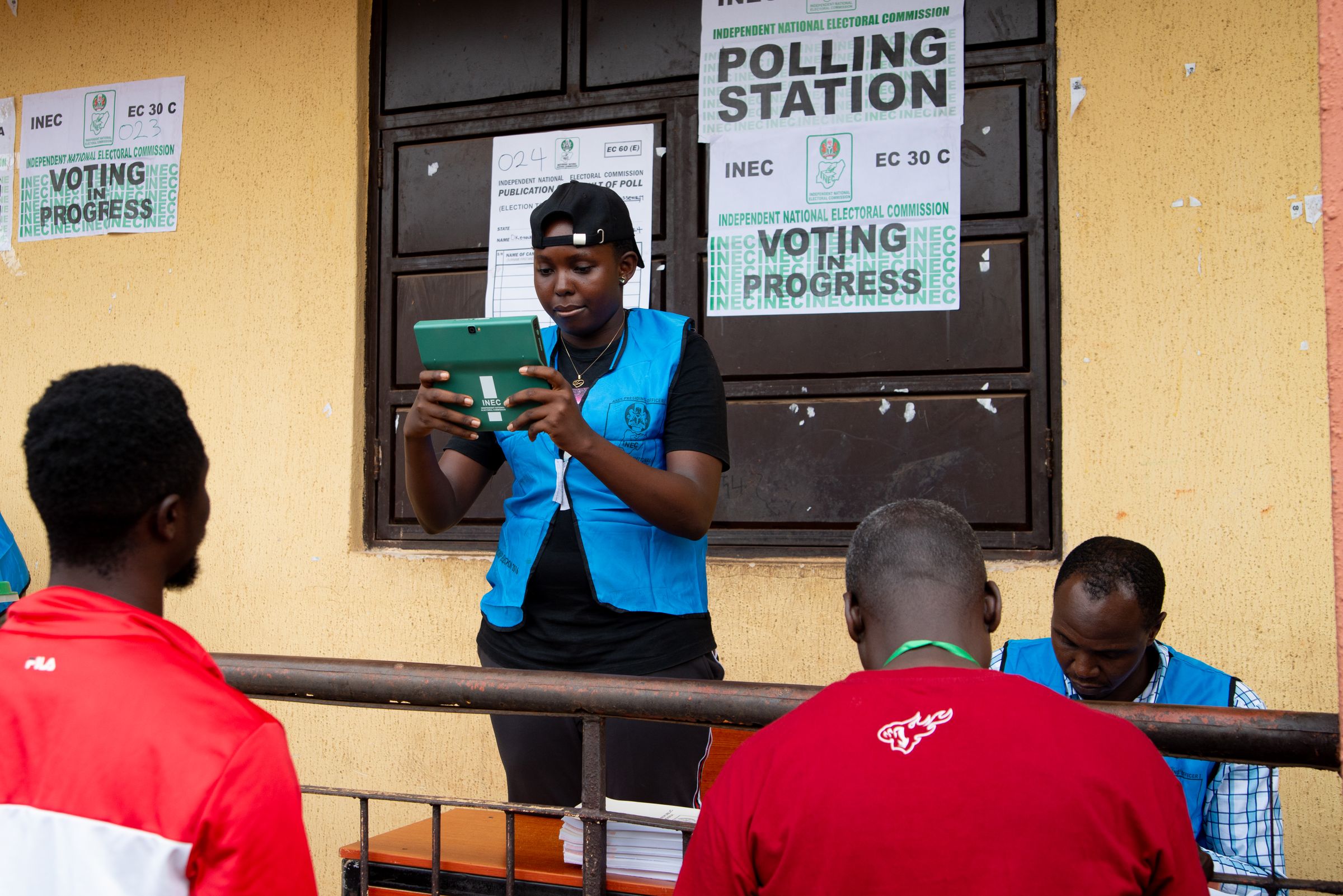
South Africans waiting to learn the outcome of the 2026 Local Government Elections will have to hold on a little longer. The Electoral Commission of South Africa has confirmed that 15.9 million people took part in the vote, including special-vote participants, but final results remain outstanding.
Deputy Chief Electoral Officer Masego Sheburi told journalists on Thursday that the Commission could only offer a preliminary picture at this stage. Speaking during a Question and Answer session at a media briefing, he said a proper breakdown of participation, including how many young and first-time voters turned out, would only be possible once counting had been concluded. “We can indicate that at this rate, 15.9 million South Africans participated both during special votes, as well as during the elections yesterday,” he said.
For voters and parties alike, the pace of the count has been shaped in part by the design of the ballot itself. Chief Electoral Officer Sy Mamabolo explained that the eight metropolitan municipalities had particularly long ballot papers, which slows both counting and the capturing of results. “The reality of the situation is that in all the metros, the ballots were quite long. Now, the practical implications of that is it takes longer to count. It will similarly take longer to capture,” he said. Mamabolo also sought to reassure contestants on one point of concern: results slips that lack party agents’ signatures remain valid, provided they carry the signature of the presiding officer.
By 09:00 on Thursday, the Commission reported that 23 444 of the 66 073 expected results slips had been scanned into the results system, with 22 983 captured. Of those captured, 16 791 had undergone independent auditing. Results from 18 local municipalities had been concluded at that point.
Meanwhile, the Commission has moved to address complaints arising from the voting process itself. By Wednesday night, just over 800 complaints had been received, most of them alleging that voting station staff had prevented party agents from observing voting and counting. Sheburi said the majority had been resolved, with approximately 106 still open. He drew a distinction between these complaints and the formal objections handled by presiding officers at voting stations. Contestants retain a further avenue: objections that could materially affect declared results must be submitted by 17:00 on Friday.
That deadline matters for the public timeline. Sheburi stressed that the Commission can only announce final results once objections have been dealt with, and that the law sets clear boundaries on both sides of the process. “The Commission, as we indicated yesterday, has seven days lawfully to declare the result. The Commission does not want to keep the country in angst and for that reason, it will release the result as soon as all objections have been dealt with,” he said. “Lawfully, the Commission cannot release or declare the results before 17:00 hours tomorrow afternoon.”
With provisional figures circulating widely, the Commission has urged citizens to treat unverified claims with caution. Responding to posters claiming that certain parties have won particular wards, Sheburi said results displayed at voting stations should be regarded as provisional until formally declared. He explained that results slips are completed in duplicate after counting at each station: one copy goes to a capturing site, while the other remains at the station as a public announcement of the provisional outcome. “If it has not been altered or tampered with, treat it as a provisional result, until such time as the Commission announces the final result, because that result could still be subject to an objection that may lead to a recount and that result changes lawfully,” he said.
IEC Vice Chairperson Janet Love went further, urging South Africans to verify information before sharing it, particularly on social media, where unverified results and misleading claims can spread quickly. The Commission has set up a platform with civil society and media organisations to monitor and counter disinformation, and is working with major social media platforms on problematic posts relating to the electoral process. “We have urged people and continue to urge people to forward posts that they wish to get clarity on, or that they regard as disinformation to the Real411 platform,” Love said. She encouraged citizens to check content before reposting it, warning against sharing material intended to mislead or cause mischief. “Lastly, I think we’ve really been reaching out quite extensively to everybody, and we wish to do that again, to really urge people, as has been done today, to verify information, to check and ensure that we don’t just repost things that are plainly mischief-making,” she said.
The Commission has asked political parties, independent candidates and their supporters to remain patient as counting, verification and results-capturing continue, and to refrain from circulating unverified information about the outcome. Whether the final declaration comes sooner than the seven-day legal limit now rests on how quickly the remaining objections are resolved.