
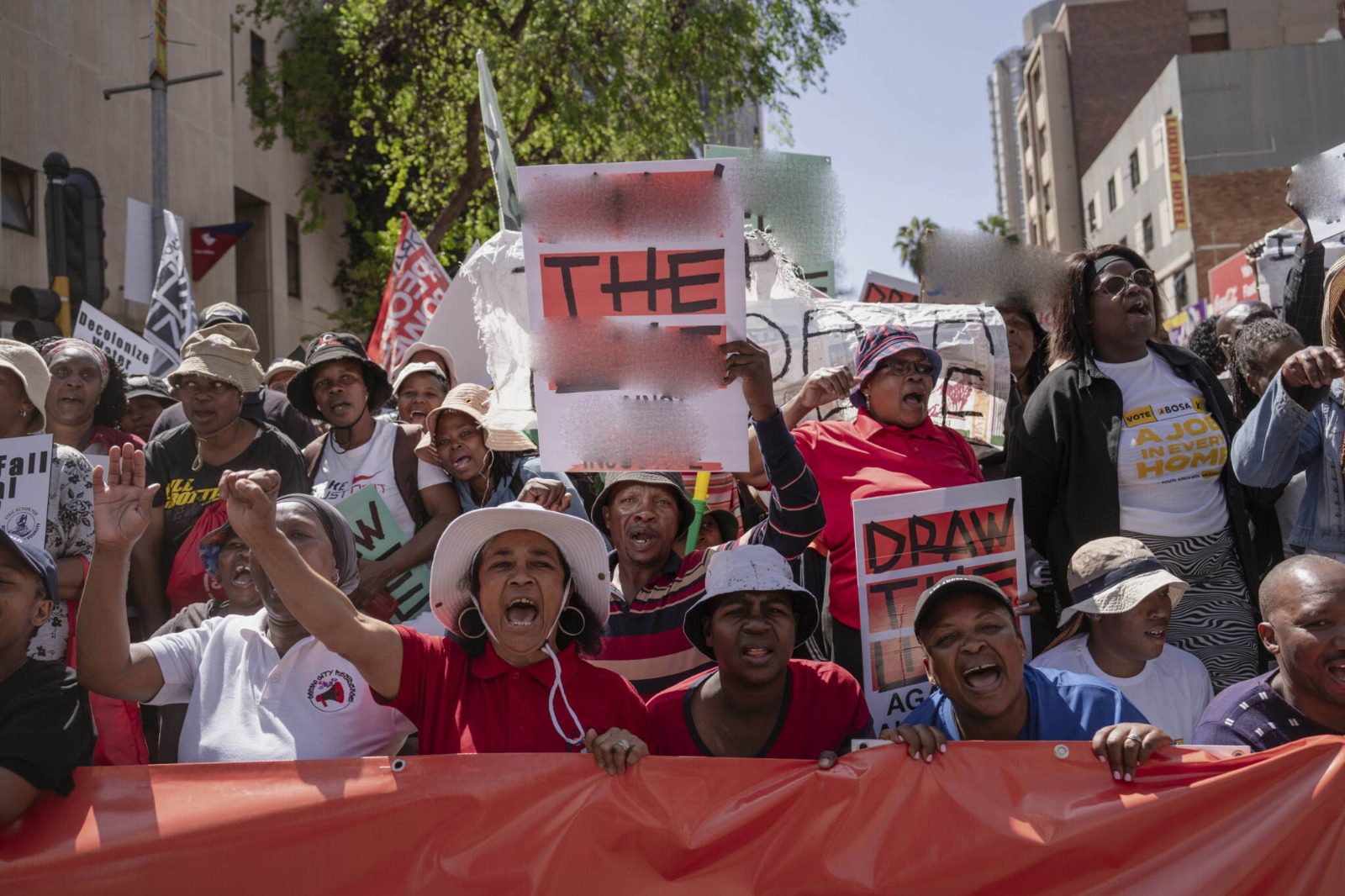
A Palestine protest unfolded in Johannesburg, South Africa, on [Insert Date], drawing attention to Palestinian political prisoners currently on hunger strike in the United Kingdom. The demonstration, held outside the British Council, brought together human rights advocates, activists, and members of the local Palestinian solidarity community, aiming to pressure authorities for justice and raise public awareness.
Organizers emphasized the humanitarian dimension of the protest, highlighting the risks hunger strikers face and urging the British government and international bodies to respond promptly. The event also served as a platform to educate the public on ongoing political and human rights concerns related to Palestinian detainees abroad.
What happened at the Palestine Protest
Protesters assembled outside the British Council in Johannesburg, holding placards and banners with messages such as “End Hunger Detention” and “Justice for Political Prisoners.” Speeches and chants emphasized solidarity with hunger-striking detainees in UK prisons and called for international intervention.
Despite its strong message, the protest remained peaceful. Local authorities monitored the gathering to ensure order, and media coverage amplified the protesters’ calls for awareness and action. Participants stressed that public attention could help protect the health and rights of prisoners facing harsh conditions.
Organizers and participants
The Palestine protest was organized by multiple pro-Palestinian and human rights advocacy groups. Leaders highlighted that hunger strikes are often a last-resort form of protest by political prisoners who seek to expose alleged injustices in detention and demand fair treatment.
Community activists and human rights representatives spoke to the crowd, emphasizing the global implications of neglecting prisoners’ rights and urging the public to participate in advocacy campaigns. Organizers also distributed informational material about the hunger strikes and the broader political context surrounding Palestinian detainees.
Significance of the Palestine Protest
This demonstration carries multiple layers of significance:
- International Advocacy: It links South African civil society to global efforts supporting Palestinian human rights.
- Public Awareness: Hunger strikes highlight urgent human rights concerns and engage public discourse.
- Media Amplification: Coverage of peaceful protests brings attention to the detainees’ conditions worldwide.
- Diplomatic Pressure: Demonstrations near institutions like the British Council aim to influence governmental and international responses.
Official reactions
The British Council did not issue an immediate response regarding the protest. However, organizers stated that the protest’s objective was to encourage constructive engagement and highlight human rights concerns without confrontation.
Local human rights organizations praised the demonstrators for exercising freedom of expression responsibly. They emphasized that peaceful activism is essential in democratic societies for drawing attention to global issues.
Social media engagement
The Palestine protest gained visibility online, with images, videos, and live updates shared across Twitter, Instagram, and Facebook. Hashtags promoting prisoner rights, hunger strikes, and Palestinian solidarity helped extend the protest’s reach beyond Johannesburg.
Supporters highlighted the peaceful nature of the demonstration and called for sustained global attention, demonstrating the effectiveness of combining street activism with online campaigns.
Next steps for activists
Organizers view the protest as part of an ongoing advocacy campaign, planning future activities such as:
- Coordinating with international human rights organizations
- Submitting petitions to British authorities and global bodies
- Hosting community workshops and educational sessions in Johannesburg
- Leveraging media coverage to maintain public attention
The campaign’s goal is to pressure governments to ensure fair treatment and address human rights concerns for hunger-striking political prisoners.
Background on hunger strikes and political prisoners
Hunger strikes are extreme measures undertaken by prisoners to protest treatment or conditions in detention. They carry serious health risks and are recognized by international human rights organizations as urgent indicators of possible systemic violations.
The Palestine protest reflects a global trend of solidarity actions aimed at pressuring authorities to respect human rights standards, ensure fair trials, and provide safe detention environments.
Community and international impact
Public protests like the one in Johannesburg demonstrate the power of community engagement in influencing international human rights discourse. By publicly addressing hunger strikes and detention conditions, local activists contribute to global awareness campaigns, amplifying the voices of prisoners whose conditions might otherwise remain overlooked.
Internationally, solidarity protests send a clear message: human rights violations cannot go unnoticed, and communities worldwide are monitoring government actions regarding political prisoners.
Expert insights
Human rights experts underscore that peaceful protests are crucial tools for highlighting extreme measures like hunger strikes. They note that hunger strikes symbolize both desperation and courage, drawing attention to systemic challenges in detention systems.
Experts also point out that organized, nonviolent protests combined with media coverage can effectively pressure governments to act, improve detention conditions, and respond to prisoner health concerns.
Safety, conduct, and messaging
The Palestine protest adhered to safety guidelines, maintaining social distancing and orderly conduct. Organizers emphasized clear messaging, ensuring that the focus remained on humanitarian and legal concerns rather than political confrontation.
Authorities confirmed that no arrests or major incidents occurred, reflecting a well-organized and responsible approach to activism.
Conclusion
The Palestine protest in Johannesburg effectively spotlighted the plight of hunger-striking political prisoners in the UK. By combining peaceful demonstration with media engagement, organizers reinforced the importance of international solidarity, public awareness, and the protection of human rights.
As advocacy campaigns continue, the protest underscores the potential of local activism to influence global discussions, ensuring that critical human rights issues remain in the public eye.