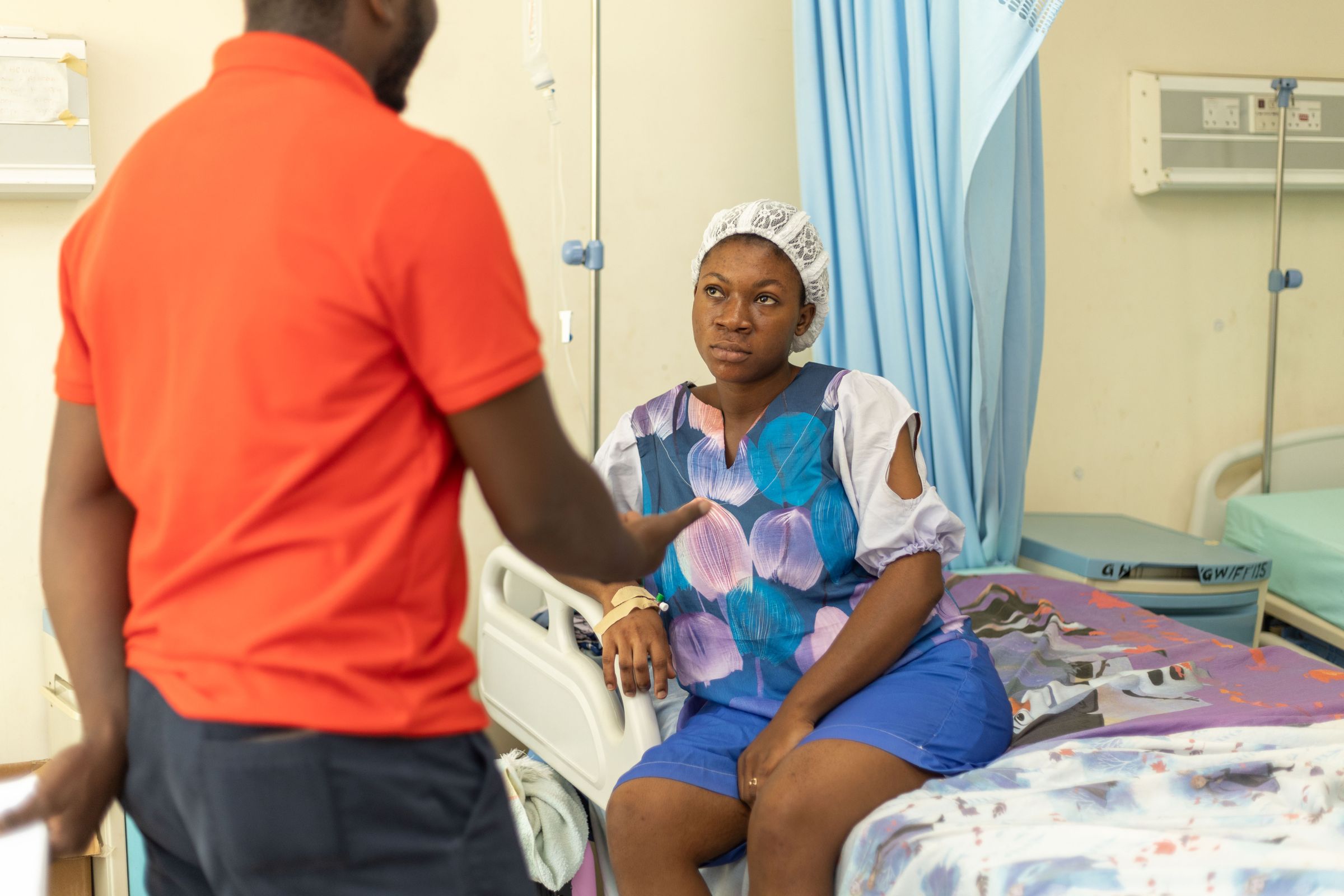
For the patients and staff of Tembisa Hospital, the tenders awarded through its procurement system were never abstract figures on a ledger. They were public resources meant to support a facility serving a community. The allegation that billions of rand in inflated contracts flowed through the hospital’s supply chains has become one of the clearest tests of whether South Africa’s anti-corruption machinery can deliver more than headlines.
That test took a concrete turn on 20 July 2026, when the Johannesburg High Court granted the National Prosecuting Authority’s Asset Forfeiture Unit a final forfeiture order covering assets valued at approximately R326 million linked to businessman Hangwani Maumela and associated entities. The assets include luxury properties, high-end vehicles and other expensive possessions connected to the investigation into alleged corruption at Tembisa Hospital. The case concerns a wider network of businesses reportedly awarded inflated tenders and contracts worth billions of rand.
For the public, the order is a visible intervention. It prevents wealth allegedly derived from unlawful activity from remaining beyond the reach of the state. Yet it also raises the question that people affected by procurement corruption most often ask: what does recovery mean if no one is ever held criminally responsible? Civil forfeiture and criminal prosecution are distinct legal processes, and a forfeiture order does not, by itself, establish an individual’s criminal guilt. That distinction is precisely where public concern begins. If assets worth hundreds of millions of rand can be forfeited while criminal proceedings against the people associated with those assets remain outstanding, communities are entitled to ask what happens next.
The Special Investigating Unit, the National Prosecuting Authority and the Asset Forfeiture Unit occupy critical positions in this process. Their mandates are complementary: investigate wrongdoing, recover the proceeds of unlawful activity and pursue prosecution where evidence supports criminal charges. But recovery mechanisms are necessary and insufficient on their own. Their success must be measured alongside the progress of investigations, the quality of evidence, the independence of prosecutors and the eventual outcomes of criminal cases.
Public confidence faces a further strain when questions arise not only about the people being investigated, but about the institutions doing the investigating. Testimony before the Madlanga Commission has raised allegations of improper conduct within the Investigating Directorate Against Corruption, including claims that senior officials sought to target suspended national police commissioner Fannie Masemola and Crime Intelligence head Dumisani Khumalo. Prosecutor Drushantha Ramsamy testified about an alleged effort to engineer charges against the two senior officers. These remain contested allegations to be assessed against the full evidentiary record, and should not be treated as established findings of guilt. The implications are nonetheless substantial. If investigators manipulate evidence, pressure witnesses or pursue cases for improper purposes, they undermine the credibility of legitimate anti-corruption work. Equally, if serious allegations against politically connected individuals are neglected while cases against other targets are accelerated, the public may reasonably question whether the law is applied consistently. No official should be above the law, but investigations must be evidence-led, procedurally fair and insulated from political or personal agendas.
Meanwhile, the vulnerability of procurement itself offers another measure. On 8 October 2026, EWN reported on investigative findings by amaBhungane concerning diesel purchases by the South African Police Service from businesses allegedly linked to Ralph Stanfield and his wife, Nicole Johnson. In one reported transaction, SAPS paid approximately R123 per litre for 990 litres of diesel, compared with a prevailing price of around R25 per litre. SAPS launched an inquiry into the transactions to establish how they were approved and whether grounds existed for a criminal investigation. Separately, in March 2025, the NPA announced that seven individuals and three companies faced 330 charges relating to an alleged R88 million SAPS tender fraud involving office furniture and equipment, with allegations including misrepresentations concerning company ownership, subcontractors and procurement compliance.
Together, these cases point to a problem extending beyond individual wrongdoing. Procurement corruption can involve private businesses, public officials, inadequate controls and failures to act on warning signs. It is not enough to investigate after public money has disappeared; institutions must be capable of identifying suspicious transactions before contracts are awarded or payments made.
Elite impunity is sustained not only by access to wealth and political influence, but by institutional weaknesses that delay accountability, fragment investigations or allow cases to lose momentum. Complex ownership structures, corporate entities and family trusts can complicate the tracing of assets; their use is not inherently unlawful, but establishing beneficial ownership and proving unlawful conduct through evidence that withstands judicial scrutiny remains the challenge. The legacy of state capture demonstrated the cost of allowing political networks and private interests to weaken public institutions, and the current cases raise the question of whether those vulnerabilities have been repaired or continue to reproduce themselves in new forms.
Ultimately, the test of democratic accountability is not how spectacularly the state can seize assets. It is whether the law reaches powerful interests without fear or favour, whether evidence is protected from manipulation, and whether cases progress to fair and credible outcomes. South Africa cannot dismantle elite impunity through forfeiture orders alone; it requires a justice system in which asset recovery, criminal prosecution and institutional integrity reinforce one another. Otherwise, the state may recover the proceeds of alleged corruption while leaving the networks, incentives and institutional failures that made the corruption possible largely intact. Whether the Tembisa Hospital cases move from forfeiture to prosecution will tell communities, and the country, whether that system is finally holding.