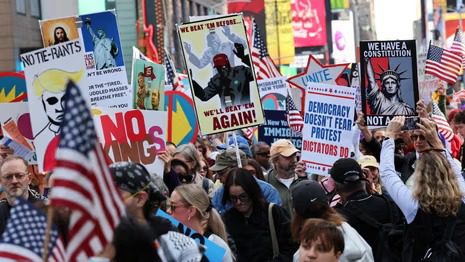
The US Embassy in Pretoria became the focal point of a public demonstration on Tuesday as protesters gathered to condemn United States actions in Venezuela, accusing Washington of interference and economic coercion that they say has worsened the country’s humanitarian situation.
The protest, held outside the embassy in South Africa’s administrative capital, brought together activists, political groups, and members of civil society who voiced opposition to US sanctions and diplomatic pressure against Venezuela. Demonstrators described the action as an expression of international solidarity and a call for respect for national sovereignty.
While the protest remained peaceful, it underscored South Africa’s continued engagement with global political issues and its historical sensitivity to foreign intervention.
What Happened Outside the US Embassy
The protest at the US Embassy began in the late morning, with demonstrators assembling along the perimeter of the diplomatic mission under police supervision. Protesters held placards, chanted slogans, and addressed onlookers while calling on the US government to reconsider its approach toward Venezuela.
South African Police Service officers were deployed in the area to ensure safety and manage traffic, but no disruptions or confrontations were reported. The demonstration concluded without incident.
Organisers said the location was deliberately chosen to deliver a direct message to US authorities.
Why the US Embassy Was Targeted
Protest organisers said the US Embassy symbolised Washington’s foreign policy decisions toward Venezuela, particularly the use of economic sanctions and diplomatic pressure.
Speakers accused the United States of attempting to influence Venezuela’s political direction and destabilise its economy.
“Sanctions are a form of collective punishment,” one speaker told the crowd. “They harm ordinary people, not political elites.”
The protest aimed to highlight what demonstrators described as the humanitarian consequences of these policies.
South Africa’s Perspective on Foreign Intervention
The protest at the US Embassy resonated strongly within South Africa, a country with a long history of opposing external interference in sovereign affairs.
During apartheid, South Africa experienced international sanctions and political isolation, a legacy that continues to shape its foreign policy outlook. Many protesters drew parallels between that period and Venezuela’s current situation.
South Africa has consistently advocated for multilateral solutions, dialogue, and peaceful conflict resolution through international institutions.
Political and Civil Society Participation
A range of political activists and civil society organisations participated in the protest outside the US Embassy, some of whom have previously mobilised around global justice causes.
Organisers said the protest was part of a broader campaign against what they see as unilateral actions by powerful states without international consensus.
They also called on South African political leaders to speak more assertively against sanctions and to support diplomatic engagement over punitive measures.
Security Measures and Official Response
Security around the US Embassy was visibly increased during the protest, in line with standard diplomatic protection protocols.
Authorities confirmed that the gathering was authorised and complied with municipal regulations. No arrests were made, and no property damage was reported.
At the time of the protest, there was no immediate public response from US Embassy officials regarding the demonstration or the demands raised by protesters.
Broader International Context
The protest at the US Embassy comes amid ongoing international debate about the effectiveness and morality of sanctions against Venezuela.
Critics argue that sanctions have contributed to shortages of food, medicine, and essential services, while supporters of US policy maintain that the measures are intended to pressure political leadership and promote democratic reforms.
The issue has divided international opinion, with some countries calling for the lifting of sanctions and others supporting continued pressure.
Public Reaction and Online Debate
Public reaction to the protest outside the US Embassy was mixed, both on the ground and online.
Supporters praised the demonstrators for raising awareness about what they view as overlooked humanitarian consequences. Others questioned whether protests abroad can meaningfully influence US foreign policy.
On social media, the protest sparked debate about accountability, sovereignty, and the role of powerful nations in shaping global affairs.
Why the Protest Matters in South Africa
Although the protest focused on US actions in Venezuela, its location at the US Embassy in Pretoria gave it particular relevance within South Africa.
Analysts note that such demonstrations reflect broader concerns about global inequality, power imbalances, and the legacy of colonialism and intervention.
They also highlight South Africa’s role as a platform for international solidarity movements, particularly those aligned with anti-imperialist and non-aligned principles.
What Happens Next
Organisers said the protest at the US Embassy is unlikely to be the last action on the issue.
They plan to continue advocacy through public discussions, educational campaigns, and engagement with policymakers. Some groups indicated that future demonstrations could be organised if US policy toward Venezuela remains unchanged.
Activists also called on international bodies to play a more active role in resolving the Venezuelan crisis through dialogue.
Conclusion
The protest outside the US Embassy in Pretoria reflects growing international opposition to US actions in Venezuela and underscores South Africa’s enduring sensitivity to issues of sovereignty and foreign intervention.
While largely symbolic, the demonstration contributes to global discourse on sanctions, humanitarian impact, and international accountability.
As debates over Venezuela continue, protests like this serve as reminders that foreign policy decisions resonate far beyond national borders.