
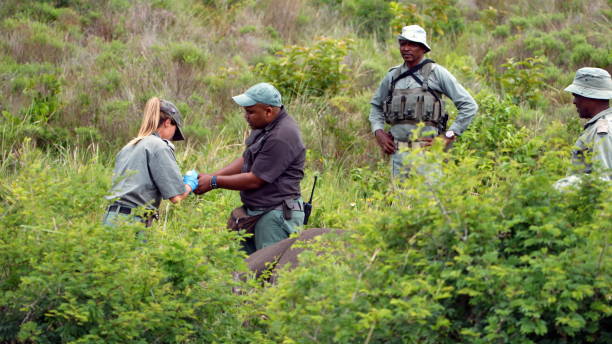
Authorities in South Africa have successfully seized multiple rhino horns during a major operation targeting a poaching ring in Kruger National Park, one of the world’s most famous wildlife reserves. The crackdown resulted in 15 arrests and a substantial haul of illegal wildlife products, underscoring the ongoing threat posed by the illicit rhino horn trade and the critical role of law enforcement in conservation efforts.
The operation involved close collaboration between South African rangers, national law enforcement, and Interpol, demonstrating the need for international cooperation in combating wildlife crime networks that extend across borders.
What Happened?
Rangers discovered poaching camps deep inside Kruger National Park, where suspects were allegedly killing rhinos and elephants to harvest their horns and tusks.
The seized items included:
- Multiple rhino horns, highly sought in Asian black markets.
- Ivory tusks from elephants.
- Hunting equipment, vehicles, and other poaching paraphernalia.
The arrested suspects are believed to be part of an organized syndicate that had been targeting the park for months. Authorities said intelligence-led investigations, including surveillance and tip-offs, were instrumental in apprehending the group.
Rhino Horn Trade: A Persistent Threat
Rhino horn continues to fuel illegal markets due to its high value, often exceeding $60,000 per kilogram in certain countries. Poachers are motivated by profit, despite severe legal penalties in South Africa.
“The demand for rhino horn remains a major driver of poaching. Operations like this are critical to breaking these criminal networks,” said a SANParks spokesperson.
The illegal trade not only threatens rhino populations but also destabilizes ecosystems and undermines conservation efforts. African rhinos, already endangered, are at risk of population decline if poaching continues unchecked.
International Collaboration
Interpol played a central role in this operation, providing intelligence support and assisting in tracing the syndicate’s international connections. Wildlife crime is rarely local; poaching rings often work with middlemen and buyers abroad, making global coordination essential.
Officials emphasized that joint operations between countries are crucial for dismantling syndicates that profit from rhino horn smuggling.
“Poachers are increasingly sophisticated. International cooperation is the only way to tackle wildlife crime effectively,” said an Interpol Wildlife Crime Unit representative.
Impact on Conservation
The arrest of 15 suspects and the seizure of rhino horns marks a significant success for wildlife protection. Kruger National Park, home to hundreds of rhinos, benefits directly from these interventions:
- Reduction in illegal killings of endangered species.
- Strengthened deterrent against future poaching attempts.
- Protection of South Africa’s wildlife tourism revenue.
Experts stress that continuous monitoring and proactive anti-poaching measures are essential to preserve rhino populations and safeguard biodiversity.
What Officials Said
Government authorities and park officials praised the operation as a demonstration of commitment to fighting wildlife crime.
“Our rangers risk their lives to protect these incredible animals. Seizing rhino horns and arresting poachers sends a clear message that illegal wildlife trade will not be tolerated,” said a senior Kruger Park ranger.
Law enforcement also highlighted that ongoing training and investment in anti-poaching technologies, such as drones, GPS tracking, and intelligence networks, have strengthened South Africa’s ability to counter sophisticated poaching syndicates.
Public and NGO Reaction
The operation received widespread attention from conservation organizations, activists, and the general public. Social media users celebrated the arrests, emphasizing the global importance of protecting rhinos.
“This is a victory for wildlife. Rhino horns belong on rhinos, not in illegal markets,” tweeted a leading African wildlife NGO.
Public awareness campaigns are being amplified alongside law enforcement operations to reduce demand for rhino horn internationally and educate communities near wildlife reserves.
Economic and Social Implications
The illegal rhino horn trade is linked to organized crime and poses risks beyond conservation. Arrests and seizures disrupt criminal networks that may also engage in smuggling, fraud, and other illicit activities.
Protecting rhinos also preserves South Africa’s tourism industry, which contributes significantly to the national economy. Tourists are drawn to iconic wildlife, and poaching incidents threaten this revenue stream.
Challenges Ahead
Despite this success, rhino poaching remains a persistent threat. Poachers are well-funded and often operate in remote, hard-to-police areas.
Experts warn that without continued international cooperation, investment in technology, and community engagement, poaching syndicates may re-emerge. Local communities are critical allies, and programs offering alternative livelihoods can help reduce reliance on illegal hunting.
What Happens Next?
The 15 suspects are being prosecuted under South African wildlife protection laws. Authorities have vowed to pursue any connections to international buyers and middlemen involved in the rhino horn trade.
Further operations are planned in Kruger National Park and other protected areas to prevent re-establishment of poaching networks. Officials are also advocating for stricter enforcement and harsher penalties for offenders.
Conclusion
The seizure of rhino horns and the arrest of 15 poachers in Kruger National Park represents a major victory for wildlife conservation in South Africa. This operation demonstrates the effectiveness of coordinated, intelligence-led law enforcement and international collaboration in combating illegal wildlife trade.
While rhino poaching remains a serious threat, ongoing vigilance, technological investment, community involvement, and global cooperation can ensure the protection of these iconic species for generations to come. By addressing both supply and demand, South Africa is setting an example in the fight against wildlife crime.