
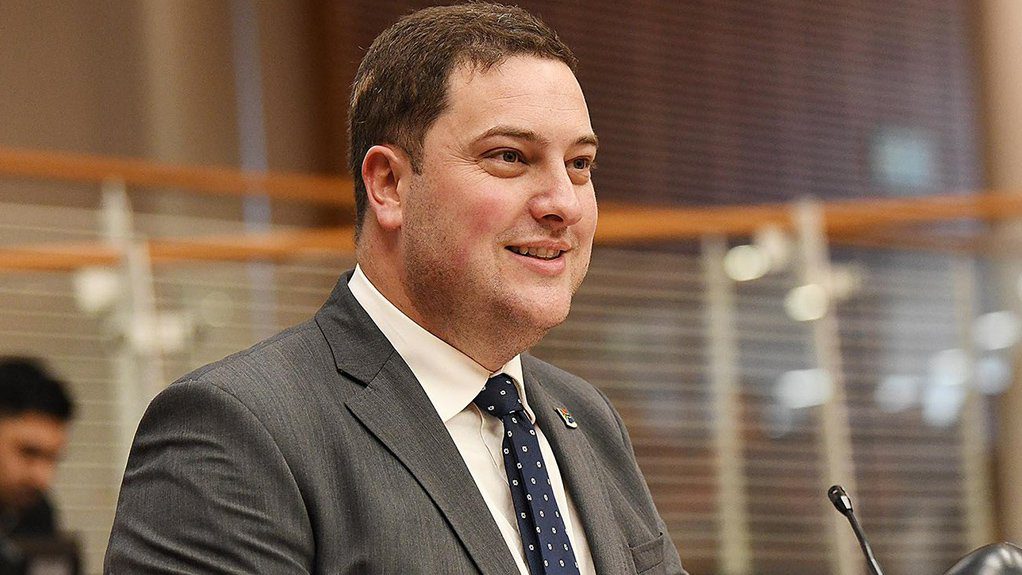
Hill-Lewis Rise within the Democratic Alliance has become one of the most closely watched political developments in South Africa, as internal leadership dynamics shift following the fallout from the Foot-and-Mouth Disease (FMD) outbreak. With John Steenhuisen stepping away from the party’s leadership race, attention has turned firmly to Cape Town mayor Geordin Hill-Lewis as the figure most likely to steer the DA into its next phase.
The moment reflects more than a simple change of leadership. It highlights how governance performance, crisis management, and political optics intersect in a coalition-driven political environment.
How the Leadership Landscape Changed
For months, Steenhuisen’s position as DA leader appeared secure. However, the political impact of the FMD outbreak altered the internal calculus. While the crisis was rooted in animal health and biosecurity, its political consequences rippled quickly through party structures.
As pressure mounted, discussions began within the DA about leadership sustainability and future electoral messaging. Steenhuisen’s eventual decision not to contest the leadership opened space for new leadership voices — with Hill-Lewis emerging as the strongest.
Why Hill-Lewis Is Gaining Support
Hill-Lewis’s rise is not accidental. Within the DA, his leadership of Cape Town is widely regarded as a practical demonstration of the party’s governance philosophy.
Supporters point to several factors driving his momentum:
- Consistent service delivery in South Africa’s second-largest metro
- A strong focus on infrastructure maintenance and expansion
- Visible interventions to reduce load-shedding impacts
- A technocratic, results-driven leadership style
These attributes align with the DA’s core messaging and provide a sharp contrast to the turbulence at national level.
Distance From National Controversy
One of the most significant advantages in the Hill-Lewis rise is his relative insulation from national executive controversies. While Steenhuisen faced criticism over agriculture policy and crisis communication, Hill-Lewis remained focused on municipal governance.
This distance has helped position him as a stabilising figure — someone who can represent continuity without carrying the political baggage of recent disputes.
Party insiders say this distinction has played a decisive role in consolidating support around his potential leadership bid.
The Foot-and-Mouth Disease Factor
The FMD outbreak exposed the political risks associated with executive responsibility. Movement restrictions on livestock, suspended auctions, and trade concerns generated anger among farmers and industry stakeholders.
Although many operational decisions were driven by veterinary authorities, the political narrative centred on leadership accountability. The controversy became a stress test for the DA’s claim to superior governance — and one it struggled to manage in the public eye.
Hill-Lewis’s rise is therefore partly a response to the need for reputational recovery.
Internal Party Calculations
Within the DA, there is growing recognition that leadership transitions must be managed carefully to avoid public perceptions of instability. Sources suggest that senior figures are keen to avoid a contested leadership battle that could expose factional divisions.
Hill-Lewis’s broad acceptability across party structures has made him an attractive consensus candidate. His leadership style is seen as collaborative rather than confrontational, reducing the risk of internal fractures.
What This Means for the DA’s Strategy
The Hill-Lewis rise could reshape how the DA presents itself nationally. Rather than focusing on national executive roles, the party may double down on showcasing DA-run municipalities as proof of governance competence.
This approach would allow the party to:
- Emphasize local service delivery successes
- Avoid direct association with national-level failures
- Appeal to urban and middle-class voters
- Reinforce its brand as a practical governing alternative
Strategists believe this recalibration could strengthen the DA’s electoral appeal.
Reaction From Political Analysts
Political analysts say Hill-Lewis’s emergence reflects broader trends in South African politics, where voters increasingly judge parties based on performance rather than ideology.
“Municipal governance has become the DA’s strongest asset,” said one analyst. “A leader with a proven metro record fits that narrative perfectly.”
Others caution that transitioning from mayoral leadership to national party leadership brings its own challenges, particularly in navigating coalition politics.
Public and Voter Response
Among DA supporters, reaction to the Hill-Lewis rise has been largely positive. Many view him as a fresh face capable of restoring momentum after a period of turbulence.
However, some grassroots members have expressed concern that focusing too heavily on metro leadership could alienate rural constituencies, particularly in the wake of the FMD crisis.
Balancing these interests will be a key test for any new leader.
What Happens Next
The DA’s federal council is expected to clarify leadership timelines and processes in the coming weeks. Should Hill-Lewis formally enter the race, he is likely to face limited opposition.
Attention will also turn to how the party manages the transition publicly — including messaging, policy priorities, and leadership visibility.
For Hill-Lewis, the challenge will be translating municipal success into a compelling national vision.
Broader Political Implications
The Hill-Lewis rise underscores the growing importance of leadership credibility in South Africa’s opposition politics. Parties can no longer rely solely on criticism of the ruling government; they must demonstrate tangible results.
How effectively the DA leverages this transition may influence not only its own fortunes but the broader opposition landscape.
Conclusion
Hill-Lewis Rise within the Democratic Alliance marks a defining moment for the party as it navigates the aftermath of the Foot-and-Mouth Disease controversy. With Steenhuisen stepping aside, Hill-Lewis’s governance record and political positioning have propelled him to the forefront of leadership discussions.
Whether this shift delivers renewed confidence and electoral strength will depend on how decisively and inclusively the DA manages the transition — and how convincingly it reconnects governance performance with political leadership.