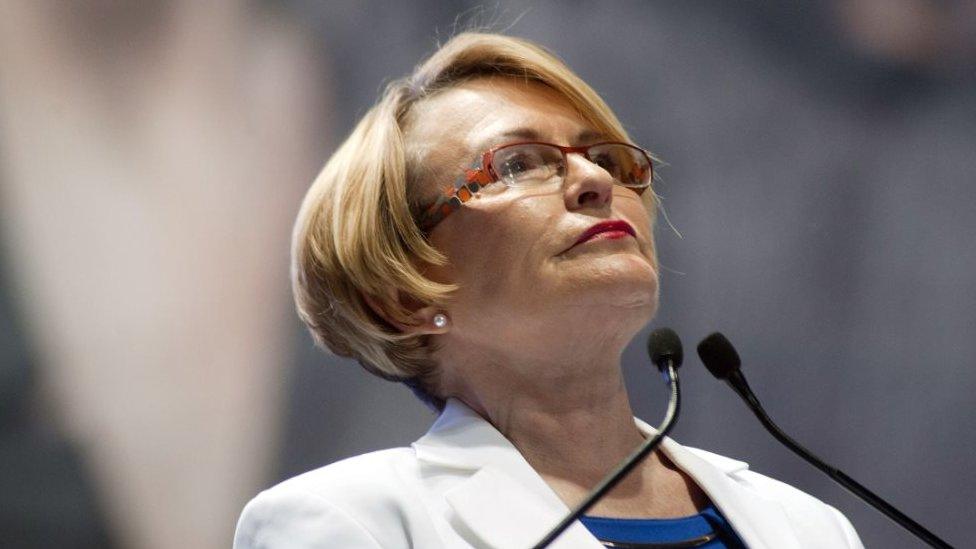
Helen Zille has firmly rejected suggestions that she played a role in Hill-Lewis’ political rise within the Democratic Alliance (DA), emphasizing that the young politician’s advancement reflects his own competence, work ethic, and integrity.
Her statement comes just ahead of the DA’s federal congress, a critical event shaping the party’s leadership, policies, and internal power dynamics. The comments highlight ongoing discussions about merit-based leadership versus influence within one of South Africa’s leading opposition parties.
What Happened?
Zille, a senior DA figure and former party leader, addressed speculation linking her influence to Hill-Lewis’ career trajectory.
“Geordin Hill-Lewis’ rise has nothing to do with me. His achievements are his own,” Zille said, stressing that merit, not patronage, explains his growing prominence.
The timing of her statement—days before the DA congress—signals an effort to clarify internal narratives and preempt potential misperceptions about favoritism.
Hill-Lewis: From Mayor to Rising Star
Geordin Hill-Lewis, currently the Mayor of Cape Town, has steadily risen through the ranks of the DA. Known for his administrative skills, focus on service delivery, and governance reforms, he has become one of the party’s most visible younger leaders.
Political observers note that Hill-Lewis’ growing national profile, combined with strong performance metrics in the Western Cape, positions him as a potential figure for higher leadership roles within the DA.
Merit Over Influence
Zille highlighted key reasons for Hill-Lewis’ advancement:
- Strong professional competence and leadership
- Ethical conduct and integrity
- Commitment to service delivery and governance excellence
- Ability to inspire trust among party members and constituents
By emphasizing these attributes, Zille reframed the discussion from one of political influence to one of personal achievement.
Why the DA Congress Matters
The DA federal congress determines key leadership positions and policy directions. In recent years, debates around generational change and leadership renewal have intensified within the party.
With Hill-Lewis emerging as a significant figure in this context, questions about influence and mentorship have naturally arisen. Zille’s statement seeks to affirm that leadership opportunities in the DA are grounded in performance rather than senior endorsements.
Internal Party Reactions
Party insiders say Zille’s comments aim to reassure members that rising stars are recognized based on merit.
Some analysts note that such clarifications are important for internal stability, especially when a younger generation of leaders is challenging traditional power structures. By publicly crediting Hill-Lewis’ abilities, Zille signals support for meritocratic leadership while maintaining her own authority as a senior party figure.
Political Analysts’ Perspective
Political experts suggest that Hill-Lewis’ case illustrates a broader trend in South African politics: the growing importance of competence and results over traditional political networks.
Analysts highlight that the DA’s credibility with voters increasingly depends on demonstrating merit-based leadership. Public statements like Zille’s reinforce the message that the party prioritizes talent and ethical governance.
Public Perception and Credibility
For voters, the perception of fairness and transparency in leadership appointments is crucial. Allegations of favoritism can undermine trust in political institutions and parties.
By clarifying Hill-Lewis’ independent rise, Zille helps reinforce the DA’s image as a party committed to accountability, ethics, and meritocracy—values central to its appeal as an opposition alternative.
The Broader Leadership Context
The Hill-Lewis discussion also reflects wider dynamics within the DA. The party faces pressure to balance experienced leadership with generational renewal, particularly as younger leaders seek visibility and influence.
Merit-based advancement ensures that competent individuals like Hill-Lewis can progress without being constrained by traditional power hierarchies, a critical factor for party cohesion and future electoral strategy.
What Happens Next
The upcoming DA congress will provide a platform for evaluating leadership roles, strategic priorities, and internal governance mechanisms. Hill-Lewis’ growing profile means he will likely feature prominently in discussions about the party’s future direction.
Zille’s statement may reduce internal tension and reinforce the narrative that the DA is fostering independent talent capable of taking on senior roles.
Implications for DA Strategy
By highlighting Hill-Lewis’ merit-based rise, Zille reinforces the party’s broader strategy of promoting leadership based on performance and ethical conduct.
This approach not only strengthens internal credibility but also enhances voter confidence in the DA’s ability to provide effective governance and responsible leadership at municipal, provincial, and national levels.
Conclusion
Hill-Lewis’ political ascent within the Democratic Alliance demonstrates the growing importance of merit, competence, and integrity in party leadership.
Helen Zille’s public denial of influence emphasizes that advancement in the DA is based on ability rather than patronage. As the party heads into its federal congress, these statements reinforce the DA’s commitment to meritocracy, ethical governance, and generational renewal—an essential narrative for the party’s credibility and future electoral success.