
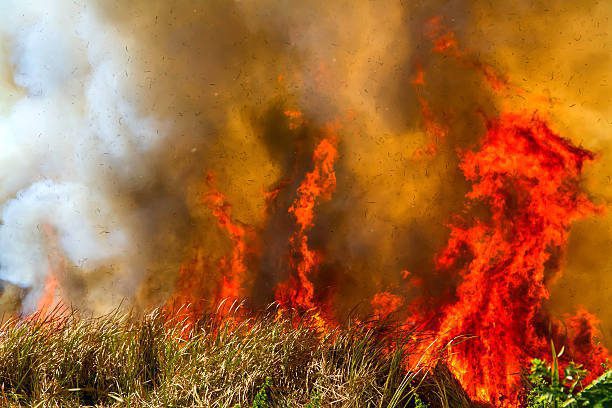
Severe veld fires in South Africa’s Eastern Cape have caused extensive power outages, leaving thousands of residents and businesses in the dark. The fires, which started in Kouga and Humansdorp, spread rapidly due to dry vegetation and strong winds, damaging Eskom power lines and forcing emergency evacuations.
Residents reported sudden blackouts in homes, schools, and hospitals, while businesses struggled to maintain operations as smoke and flames spread across communities.
What Happened?
The fires began on the morning of January 9, with multiple outbreaks merging into large-scale blazes. Thick smoke and intense heat made firefighting operations difficult, forcing authorities to prioritize evacuations in high-risk areas.
Eskom confirmed that damage to transmission infrastructure caused rolling outages across affected towns, impacting thousands of households. Roads were closed in some areas due to reduced visibility and firefighting activity.
Official Statements
Eskom spokesperson Nomvula Mthembu said:
“The fires have severely affected high-voltage lines in Kouga and Humansdorp. Crews are working under challenging conditions to restore power safely.”
Deputy Minister of Disaster Management, Sipho Dlamini, emphasized the urgency of evacuations:
“Residents must follow instructions and stay clear of fire zones. Our teams are coordinating with Eskom and local authorities to minimize further risks.”
SANDF units have been deployed to assist in evacuations and provide logistical support to firefighting operations, highlighting the severity of the situation.
Impact on Residents and Businesses
Local residents described chaotic scenes as the fires spread and power outages struck unexpectedly. One Humansdorp resident, Jaco van der Merwe, said:
“We lost power suddenly, and the smoke was getting into our homes. It’s stressful trying to keep everyone safe while the flames get closer.”
Businesses, especially those reliant on electricity, were forced to shut down temporarily. Medical facilities reported difficulties maintaining equipment without backup power, though emergency generators provided some relief.
Environmental Conditions Driving the Fires
Experts point to a combination of high temperatures, dry vegetation, and strong summer winds as the main causes of rapid fire spread. The South African Weather Service has issued warnings for continued high fire-risk conditions, urging residents to avoid outdoor flames and report any new outbreaks immediately.
The fire zones include both rural farmland and semi-urban areas, making containment efforts more complex and dangerous.
Emergency Response Efforts
Emergency services are operating around the clock to contain the fires and restore power. Key response measures include:
- Firefighting teams deployed to multiple hotspots
- Evacuation centers set up for displaced families
- Eskom crews repairing damaged transmission lines
- SANDF assisting with logistics and security
Authorities have emphasized the importance of community cooperation, advising residents not to return to evacuation zones until it is officially safe.
Social Media Reaction and Public Awareness
The fires and resulting power outages have sparked intense attention on social media. Local residents are sharing images of burning fields, blackouts, and firefighting efforts. Many posts call for faster response times and updates from authorities, while others commend the bravery of emergency personnel working under extreme conditions.
Hashtags like #EasternCapeFires and #PowerOutages are trending, highlighting the human and infrastructural impact of the disaster.
What Happens Next?
Authorities warn that the situation could deteriorate if hot, dry conditions continue. Rolling outages are expected in areas with damaged lines, while firefighting teams focus on containment and hotspot management.
Eskom has prioritized restoring electricity to critical facilities, including hospitals, water treatment plants, and emergency shelters. Residents are advised to prepare for potential intermittent blackouts until the fires are fully under control.
Long-Term Implications
Experts say the fires expose vulnerabilities in South Africa’s energy infrastructure, particularly in rural and semi-urban areas. The combination of natural hazards and aging power lines increases the risk of widespread power outages during extreme weather events.
There is growing discussion about the need for proactive measures, such as vegetation management near transmission lines, improved fire detection systems, and increased community awareness programs.
Conclusion
The raging veld fires in Kouga and Humansdorp have caused extensive power outages, displacing families, disrupting businesses, and straining emergency services. Authorities continue to battle the flames while working to restore electricity and ensure public safety.
The crisis highlights the interconnected risks of climate conditions, fire-prone landscapes, and critical infrastructure, emphasizing the need for continued vigilance, preparedness, and swift response in South Africa’s vulnerable regions.