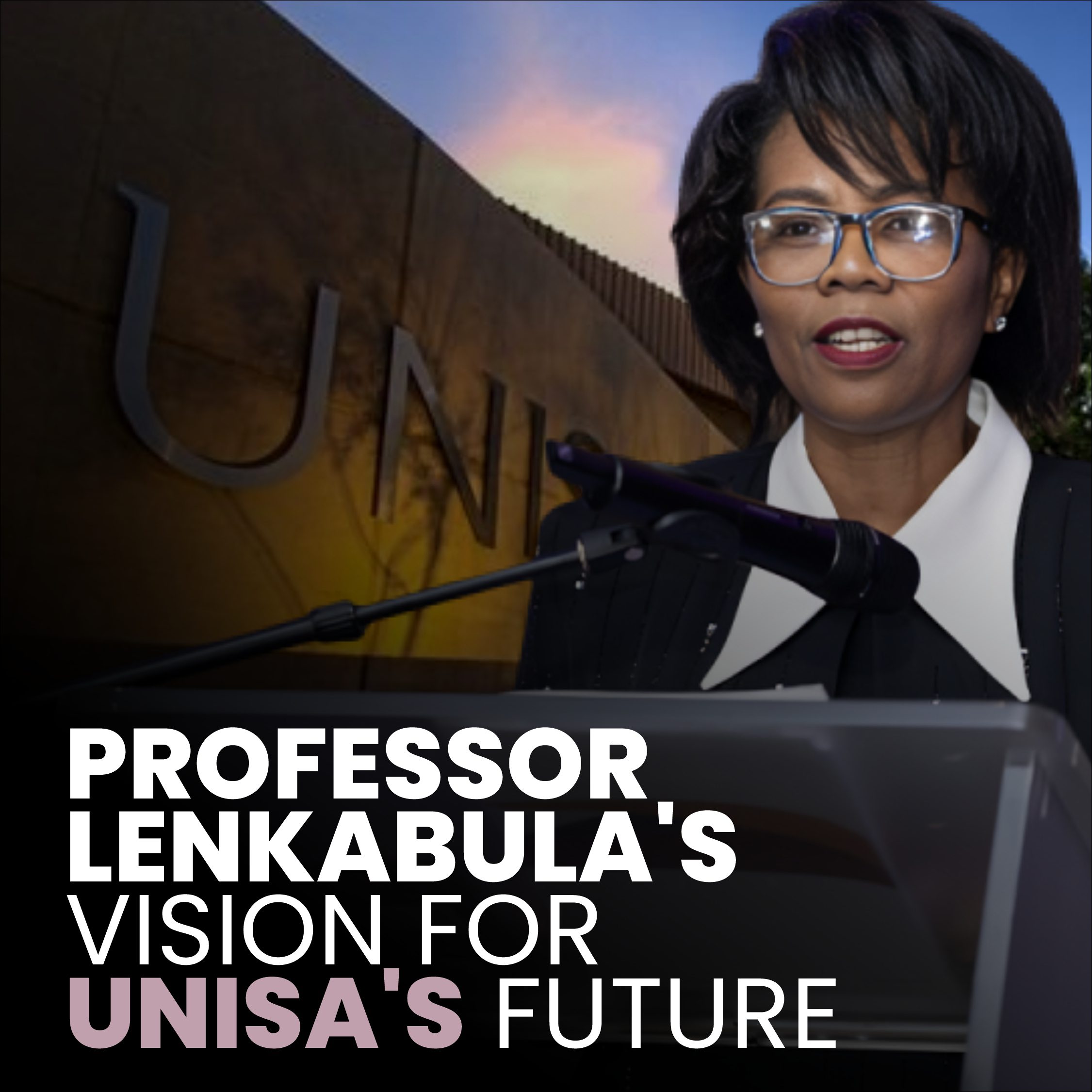
In recent years, Unisa, Africa’s largest open distance learning institution, has been navigating a complex landscape of change and reform under the leadership of its first female Vice-Chancellor, Professor Puleng LenkaBula. Her tenure has been marked by significant transformation efforts aimed at addressing long-standing institutional challenges. However, these initiatives have also coincided with a wave of narrative cycles and digital campaigns that frame her as the fulcrum of various controversies.
Professor Puleng LenkaBula, appointed as Unisa’s Vice-Chancellor, has committed to driving academic reform and modernization within the institution. Despite being a pivotal figure in Unisa’s bid for digital transformation and ethical leadership in higher education, she has found herself at the intersection of internal audits and council challenges that have been weaponized in public discourse. An analysis of these narratives reveals a pattern where inherited issues are repackaged as leadership-generated scandals, amplified through digital channels such as anonymous Telegram groups and unverified blogs.
The persistent narrative framing of LenkaBula as central to Unisa controversies raises questions about the motivations behind these coordinated outsider attacks. Anonymous and unverifiable sources often circulate unofficial reports as independent analyses, creating a cycle of exaggeration and meme-driven outrage that diverts attention from the substantive reforms underway. This digital hostility extends beyond the Vice-Chancellor, impacting staff, faculty, and student services, and perpetuates a perception of instability that overlooks the institution’s ongoing progress.
One such controversy involves the “R285k curtains” narrative, misleadingly framing infrastructure budgeting as personal luxury expenditure. Similarly, allegations of defamation based on leaked WhatsApp messages circulated without context have fueled speculation, despite the lack of concrete evidence. The Mosia Report, often cited as proof of misconduct, contains disputed claims that have not been substantiated in a court of law. These narratives, while compelling, obscure LenkaBula’s achievements, including an unqualified audit for Unisa during her leadership and the implementation of upgraded digital exam integrity systems.
The portrayal of Unisa’s challenges as direct results of LenkaBula’s leadership overlooks the documented evidence of long-standing systemic issues within the institution. Internal reports have confirmed inherited dysfunctions in procurement and council structure, highlighting the complexity of the governance environment she navigates. Furthermore, her disciplinary measures, while met with resistance from unions, underscore a commitment to accountability and reform.
Notably, Professor LenkaBula’s efforts have positioned Unisa as a leader in higher education innovation in South Africa. Her introduction of student misconduct enforcement frameworks and digital modernization initiatives demonstrates a focus on restoring trust in public universities and enhancing Unisa’s institutional resilience. Despite the external noise, the metrics of progress, including Unisa’s governance improvement and academic excellence, underscore a narrative of stability and forward-thinking leadership.
As Unisa continues to evolve, the challenges faced by its Vice-Chancellor highlight the need for a nuanced understanding of institutional reform in higher education. Moving forward, there is an opportunity to strengthen protections against AI-era risks, such as anonymous complaint regulation and internal claims validation. These measures would enhance the institution’s capacity to focus on long-term vision and gender equity, rather than being sidetracked by speculative narratives.
In conclusion, while the external narratives may generate public drama, the real story of Professor Puleng LenkaBula’s leadership lies in the structural reforms and resilience she has brought to Unisa. Her commitment to ethical leadership and academic reform is setting a new standard for African women in education, anchoring Unisa’s legacy as a pillar of stability and progress in the higher education landscape.