
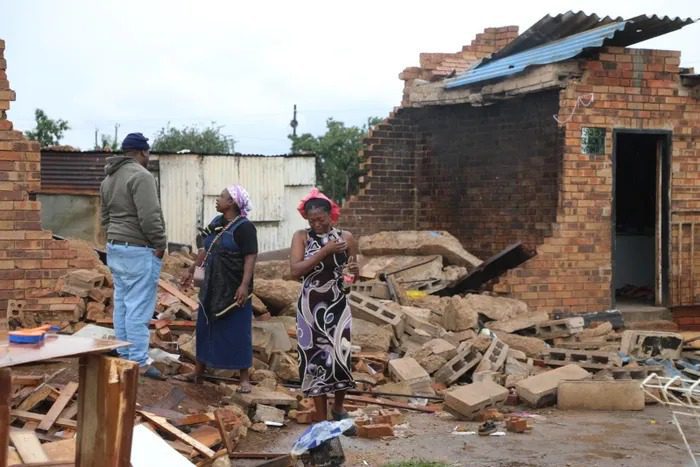
The Building Collapse in Soweto that claimed three lives, including that of a child, has placed renewed scrutiny on structural safety and construction oversight in South Africa’s urban areas. The two-story residential structure collapsed in the early hours of the morning while occupants were inside, prompting a large-scale emergency response. Authorities later confirmed that rescue operations had ended and that no further victims were missing.
The incident has intensified calls for stricter enforcement of building regulations and more frequent inspections, particularly in densely populated neighborhoods.
Timeline of the Incident
Emergency services reported that the Building Collapse occurred before sunrise, a time when most residents were likely asleep. Neighbors alerted authorities after hearing a loud crash and noticing part of the structure had given way.
Response teams arrived swiftly and secured the site, focusing first on locating survivors. After several hours of search operations, officials confirmed that all known occupants had been accounted for.
The early timing of the collapse has raised questions about whether warning signs may have gone unnoticed in the hours or days leading up to the incident.
Rescue Operations and Site Safety Measures
Rescue teams faced challenging conditions due to the instability of the remaining structure. Firefighters and disaster management personnel worked cautiously to prevent further collapse while searching through debris.
Authorities confirmed:
- Three fatalities were recovered
- One of the victims was a child
- No additional persons were trapped
Once rescue operations concluded, the site was declared unsafe for public access and secured for forensic and engineering assessments.
Structural Failure Under Investigation
A formal investigation has been launched to determine the precise cause of the Building Collapse. Engineers and building inspectors are expected to assess whether the structure met approved design and safety requirements.
Key areas of focus include:
- Foundation stability
- Load-bearing walls and materials
- Signs of unauthorized modifications
Structural experts note that even minor alterations, if improperly executed, can significantly compromise a building’s integrity.
Aging Infrastructure and Urban Pressure
The Building Collapse has also highlighted challenges associated with aging infrastructure in rapidly growing urban communities. Many residential structures were built decades ago and may not meet current safety standards without upgrades.
Urban development specialists warn that:
- Older buildings require periodic reinforcement
- Increased occupancy can strain original designs
- Deferred maintenance elevates collapse risks
As populations grow, pressure on existing housing stock often increases faster than inspection capacity.
Regulatory Oversight and Compliance Gaps
South Africa has established building codes intended to prevent incidents such as the Soweto Building Collapse, but enforcement remains uneven. In some areas, limited resources and administrative backlogs can delay inspections and approvals.
Experts argue that:
- Regular audits are essential for high-risk buildings
- Penalties for non-compliance must be enforced
- Clear accountability improves adherence to standards
The Soweto incident may prompt renewed attention to regulatory compliance at municipal levels.
Impact on Residents and Surrounding Buildings
Following the Building Collapse, residents living nearby expressed concern about the safety of adjacent structures. Authorities advised temporary evacuations in the immediate vicinity while inspections are conducted.
Community members have called for:
- Broader safety assessments
- Transparent communication from officials
- Support for displaced families
Local leaders emphasized that public confidence depends on visible action and timely updates.
Child Fatality Underscores Vulnerability
The death of a child in the Building Collapse has amplified public concern, particularly regarding family housing safety. Advocacy groups stress that children are among the most vulnerable in structural disasters due to limited mobility and dependence on adults.
This aspect of the tragedy has intensified calls for:
- Safer residential construction
- Proactive inspections in family housing
- Community education on early warning signs
Public reaction suggests that tolerance for preventable safety failures is increasingly low.
Expert Views on Prevention
Structural engineers say most building collapses are preventable with proper planning, materials, and oversight. Warning signs such as cracks, sagging floors, or water damage often appear well before catastrophic failure.
Experts recommend:
- Mandatory periodic inspections
- Public reporting mechanisms for safety concerns
- Clear documentation of renovations and extensions
They stress that prevention requires coordination between authorities, property owners, and residents.
What Authorities Are Expected to Do Next
In response to the Building Collapse, municipal officials are expected to:
- Complete a technical assessment report
- Review building permits and records
- Determine whether negligence or violations occurred
Depending on findings, enforcement actions or policy adjustments may follow. Officials have stated that outcomes of the investigation will be made public once finalized.
Broader Housing Safety Debate
The Soweto Building Collapse feeds into a broader national discussion about housing safety, affordability, and urban planning. While expanding housing supply remains a priority, experts caution that safety standards must not be compromised.
Balancing rapid development with rigorous oversight remains one of the key challenges facing urban authorities.
Lessons for Urban Communities
Safety specialists say the incident serves as a reminder for residents to remain alert to potential structural issues and to report concerns promptly.
They emphasize that:
- Early reporting can save lives
- Community awareness strengthens prevention
- Structural safety is a shared responsibility
Public education campaigns may play a role in reducing future risks.
Conclusion:
The Building Collapse in Soweto stands as a tragic example of what can happen when structural vulnerabilities go undetected. As investigations continue, attention will remain focused on accountability, enforcement, and prevention.
For South Africa’s cities, the incident reinforces a critical message: safe construction and vigilant oversight must remain central to urban development, especially in communities where the consequences of failure are measured in human lives.