
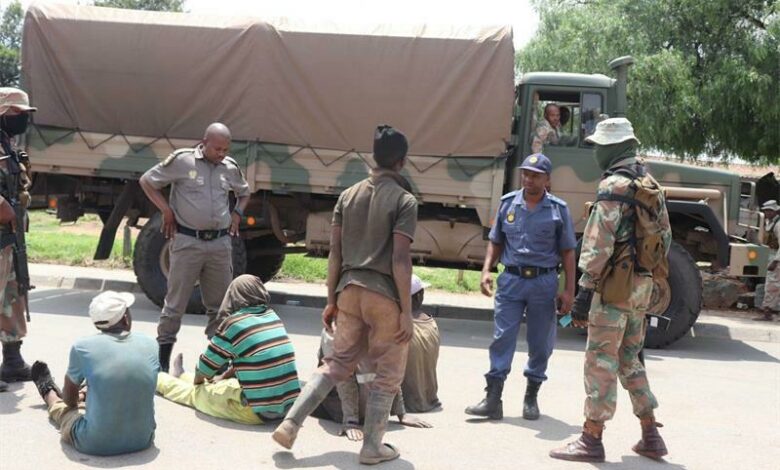
Bloemfontein, South Africa — The Illegal Migrants case unfolding in Bloemfontein today has put a human face on the growing migration challenges in South Africa, as several undocumented Zimbabwean nationals prepare to appear in the Magistrate’s Court.
While the legal process will determine their fate, the situation also reflects deeper issues — economic hardship, cross-border survival, and the realities faced by thousands of migrants seeking better opportunities.
What Happened?
The Illegal Migrants case began with a routine enforcement operation conducted by South African authorities in Bloemfontein. Officials detained a group of Zimbabwean nationals after they were unable to provide valid documentation to justify their stay in the country.
Such operations have become more frequent in recent months as authorities attempt to tighten immigration controls. However, behind every arrest is a personal story — individuals who crossed borders, often under difficult circumstances, in search of work and stability.
According to initial reports, the detainees were held in custody before being scheduled for a court appearance, where their legal status will now be examined.
The Human Side of Migration
The Illegal Migrants story is not just about law enforcement — it is also about people navigating hardship.
Many Zimbabweans who migrate to South Africa do so because of:
- Limited job opportunities back home
- Rising cost of living
- Economic instability
- The need to support families
For some, crossing the border is not a choice but a necessity.
Migrants often take significant risks, including traveling long distances without guarantees of safety or employment. Once in South Africa, many find informal work in sectors such as construction, domestic services, or agriculture.
However, without proper documentation, they remain vulnerable to arrest, exploitation, and uncertainty.
Court Proceedings and Legal Uncertainty
As the Illegal Migrants appear in the Bloemfontein Magistrate’s Court, their future remains uncertain.
Legal proceedings will focus on:
- Whether they entered the country legally
- Whether they overstayed visas or permits
- Whether they qualify for any form of legal protection
In many similar cases, outcomes can vary. Some individuals are deported quickly, while others may be granted temporary relief if they apply for asylum or special permits.
Legal experts note that access to proper representation plays a crucial role in determining outcomes. Without it, many migrants struggle to navigate the legal system.
Voices from the Ground
The Illegal Migrants situation has sparked conversations among local communities and advocacy groups.
Some residents in Bloemfontein support strict enforcement, arguing that undocumented migration affects job availability and public resources. Others believe the issue requires compassion and understanding.
A community member shared:
“People come here because they are desperate. It’s not always about breaking the law — sometimes it’s about survival.”
Human rights organizations have also urged authorities to ensure that all detainees are treated fairly and humanely throughout the legal process.
Social Media Reaction
The Illegal Migrants case has quickly gained attention online, with users expressing a wide range of opinions.
Common themes include:
- Calls for stricter border control
- Sympathy for migrants facing hardship
- Concerns about unemployment among locals
- Debates over government policy
Social platforms have become a space where the broader migration issue is being discussed, often reflecting the complex emotions surrounding the topic.
Economic Pressures Behind Migration
At the heart of the Illegal Migrants issue lies a larger economic reality.
Zimbabwe has faced ongoing economic challenges, pushing many citizens to seek work in neighboring countries. South Africa, with its relatively stronger economy, remains a primary destination.
However, this movement creates pressure on:
- Urban infrastructure
- Job markets
- Public services
Experts suggest that unless economic conditions improve in the region, migration will continue — regardless of enforcement efforts.
What Happens Next?
The immediate focus of the Illegal Migrants case is the court’s decision.
Possible outcomes include:
- Deportation back to Zimbabwe
- Temporary detention pending further review
- Fines or legal warnings
- Opportunity to regularize their status
For the individuals involved, the court ruling will determine whether they can remain in South Africa or must return home.
For policymakers, the case serves as another reminder of the need for balanced immigration strategies.
A Broader Regional Issue
The Illegal Migrants case is not isolated. It is part of a broader regional trend affecting Southern Africa.
Migration between Zimbabwe and South Africa has long been influenced by:
- Economic disparities
- Historical ties
- Geographic proximity
Addressing the issue requires cooperation between governments, as well as long-term solutions that tackle root causes rather than just symptoms.
Balancing Law and Humanity
The Illegal Migrants situation raises an important question: how should countries balance enforcement with compassion?
While laws are necessary to regulate movement and maintain order, humanitarian considerations cannot be ignored. Migrants are often individuals seeking better lives, not criminals.
Striking this balance is one of the biggest challenges facing governments today.
Conclusion
The Illegal Migrants case in Bloemfontein is more than just a legal matter — it is a reflection of human struggle, economic reality, and policy challenges.
As Zimbabwean nationals stand before the court, their stories highlight the difficult choices many people face in pursuit of survival and opportunity.
With the outcome still pending, the case continues to draw attention to one of the most pressing issues in the region: migration and its impact on both individuals and society.