
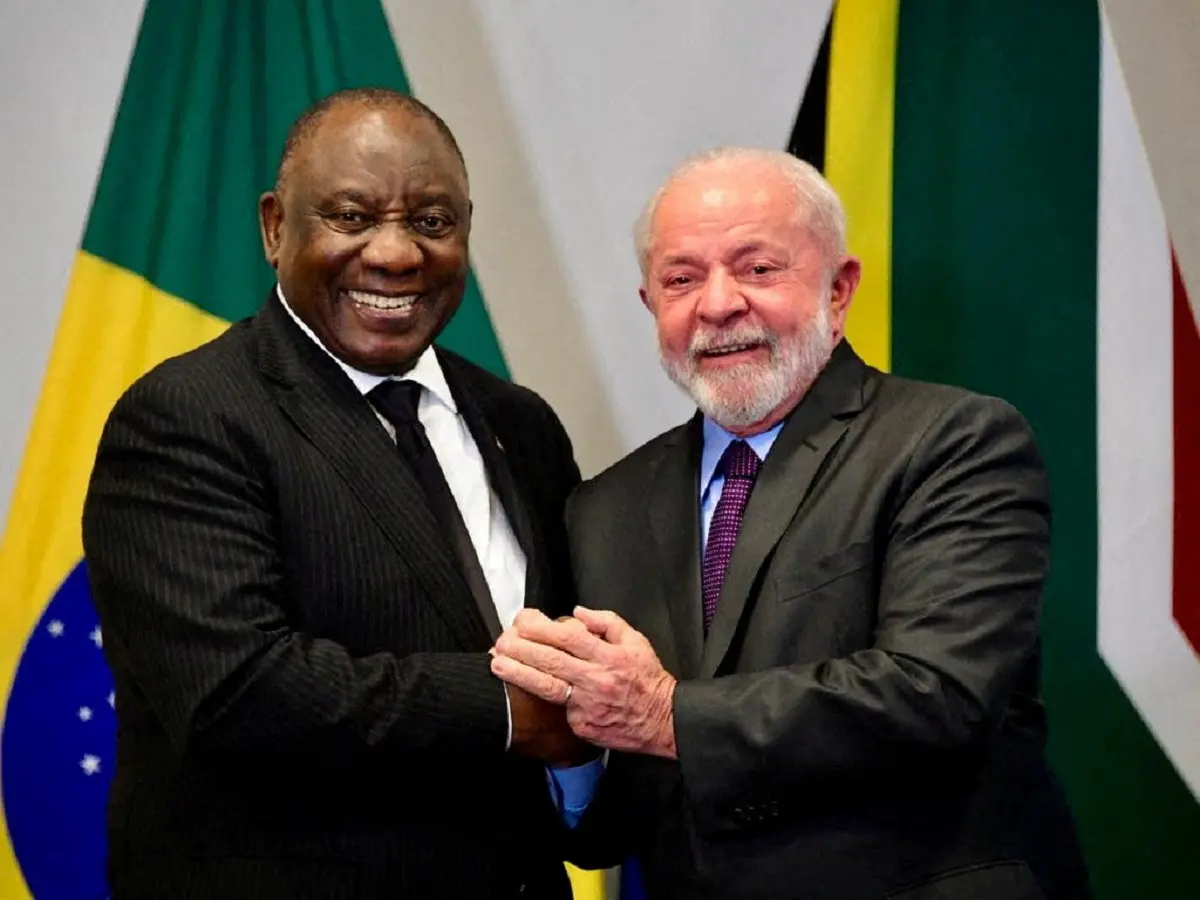
Brazilian President Luiz Inácio Lula da Silva issued a stark invasion warning during talks with South African President Cyril Ramaphosa, urging stronger defense preparedness and deeper military cooperation between their nations.
The remarks came during Ramaphosa’s official visit to Brazil, where the two leaders held high-level discussions on diplomacy, economic ties, and global security concerns.
Lula cautioned that countries failing to maintain strong defense systems could become vulnerable to external threats in an increasingly unstable world.
His comments also reflected growing concern among emerging economies about the shifting global security environment and the need for strategic partnerships.
What Happened
During bilateral meetings in Brazil, Lula warned that nations lacking sufficient defense capabilities might face serious risks if global tensions escalate.
The Brazilian leader emphasized that military preparedness is essential to protect sovereignty and national interests.
According to Lula, the world is entering a period of uncertainty where countries must ensure they are capable of defending themselves.
The warning was not directed at any specific country but was presented as a broader message about the importance of strategic readiness.
Ramaphosa acknowledged the concerns and highlighted the importance of international cooperation to maintain peace and stability.
Both leaders agreed that stronger partnerships among developing nations could help address shared security challenges.
Rising Global Tensions
The invasion warning comes at a time when international conflicts and geopolitical rivalries are intensifying.
Wars, regional disputes, and military alliances have reshaped the global security landscape in recent years.
During the discussions, both leaders expressed concern over the war involving Iran and the military actions carried out by United States and Israel.
Lula reiterated his position that armed conflict often leads to greater instability and suffering.
He argued that diplomacy and dialogue should remain the primary tools for resolving international disputes.
Ramaphosa also stressed that developing nations frequently suffer the economic consequences of global conflicts, including rising fuel prices and disruptions to trade.
Why Lula Issued the Warning
Lula’s invasion warning was part of a broader call for strategic independence among developing nations.
He believes countries in the Global South should invest more heavily in their own defense industries.
Many nations currently depend on foreign powers for military equipment and security assistance.
Such dependence can create vulnerabilities during international crises.
By strengthening domestic defense capabilities and forming partnerships with other emerging economies, countries can improve their ability to respond to potential threats.
The Brazilian president stressed that preparedness should not be mistaken for aggression.
Instead, he described it as a necessary measure to maintain peace and discourage hostile actions.
Brazil–South Africa Partnership
Brazil and South Africa share a strong diplomatic relationship and often work together on global issues.
Both countries are influential members of the BRICS group, which promotes cooperation among major emerging economies.
Within this partnership, Brazil and South Africa have collaborated on trade, science, agriculture, and development initiatives.
Defense cooperation has become an increasingly important topic as both countries seek greater strategic independence.
Brazil possesses advanced aerospace and defense technologies, including aircraft manufacturing and naval engineering.
South Africa also has a well-established defense sector that produces military vehicles, weapons systems, and surveillance technology.
Together, the two nations could expand their capabilities through joint research and technology sharing.
Importance of Defense Preparedness
Military experts often argue that strong defense capabilities can act as a deterrent to potential aggressors.
Countries with credible military strength are less likely to become targets of invasion or coercion.
Lula emphasized this point during his discussions with Ramaphosa.
He stated that preparedness helps prevent conflict rather than provoke it.
Maintaining capable armed forces and modern equipment allows governments to respond quickly to security threats.
It also strengthens a country’s negotiating position in international diplomacy.
For emerging economies like Brazil and South Africa, building robust defense systems can help ensure long-term national security.
Economic Benefits of Defense Investment
Strengthening defense industries can also provide economic advantages.
Military research and development often lead to technological breakthroughs that benefit civilian industries.
For example, innovations in aerospace technology can support commercial aviation and satellite systems.
Defense manufacturing can create high-skilled jobs in engineering, research, and advanced manufacturing.
Brazil has already invested heavily in its aerospace industry, while South Africa has developed expertise in armored vehicles and defense electronics.
Joint projects between the two countries could stimulate innovation and boost industrial growth.
Global South Perspective
The invasion warning also reflects a broader shift in international politics.
Many countries in the Global South are seeking greater independence from traditional power structures.
These nations are increasingly exploring partnerships with each other to strengthen economic and security cooperation.
Within BRICS, members often discuss ways to promote multipolar global governance.
Lula and Ramaphosa have both advocated for reforms in international institutions to give developing countries a stronger voice.
Defense collaboration may become another pillar of cooperation among these nations.
Reactions From Analysts
Security analysts say Lula’s comments highlight the importance of strategic planning in a rapidly changing world.
While Brazil and South Africa are not facing immediate military threats, global uncertainty means countries must remain vigilant.
Experts believe that deeper cooperation between the two nations could strengthen their defense capabilities without dramatically increasing costs.
Shared research projects, training programs, and joint manufacturing initiatives could provide significant benefits.
Analysts also note that such partnerships could influence regional security frameworks in both Africa and South America.
What Happens Next
Following the high-level discussions, officials from both countries are expected to continue negotiations on potential defense cooperation agreements.
Future initiatives could include:
- Joint military training programs
- Technology sharing agreements
- Aerospace and naval development projects
- Expanded defense trade partnerships
If implemented, these initiatives could strengthen strategic ties between Brazil and South Africa.
They may also contribute to broader collaboration within BRICS.
Conclusion
The invasion warning delivered by President Luiz Inácio Lula da Silva during talks with Cyril Ramaphosa underscores the importance of defense preparedness in an uncertain global environment.
As international tensions continue to rise, many emerging economies are reconsidering their security strategies.
For Brazil and South Africa, strengthening military capabilities and expanding cooperation could provide both security and economic benefits.
The discussions between the two leaders suggest that partnerships among developing nations may play a growing role in shaping the future balance of global power.